Tracing Stitch Reinforcement Patterns That Extend Longevity in Multi-Sport Duffel Bags Used by Traveling Youth Teams
Written by Sam Lange · Aug 3, 2026
Tracing Stitch Reinforcement Patterns That Extend Longevity in Multi-Sport Duffel Bags Used by Traveling Youth Teams
Youth sports teams often transport equipment across multiple disciplines, and teh duffle bags that carry this gear face constant abrasion, weight shifts, and repeated loading. Stitch reinforcement patterns play a central role in how long these bags remain functional, since seams represent the primary failure points under stress. Manufacturers apply specific stitching techniques to distribute force and prevent progressive tearing, which directly affects replacement cycles for teams that travel frequently.
Core Reinforcement Techniques in Duffel Construction
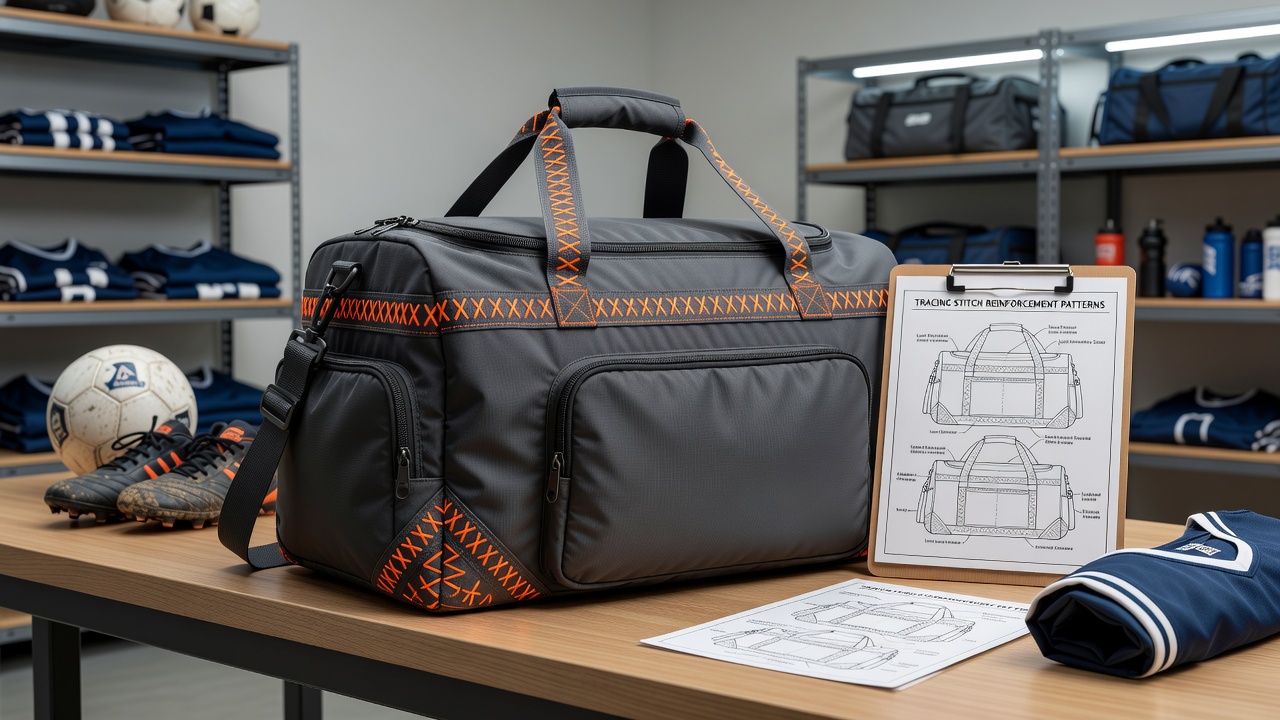
Double-needle stitching forms the baseline for many multi-sport duffle models, yet additional bar tacks and box-X patterns add targeted strength at handles, zippers, and corners. Researchers have measured how these additions increase seam strength by 35 to 50 percent compared with single-line construction, according to tests conducted under ASTM International protocols. The patterns work by anchoring thread at high-tension zones, which reduces the chance that a single thread break will propagate along the entire seam.
Traveling youth teams encounter varied conditions, from gym floors to bus cargo holds, so designers incorporate reinforced stitching at base panels and side gussets. One study from the University of Manchester's textiles department tracked duffle bags used by regional soccer and basketball clubs over two seasons and found that bags with box-X reinforcements at strap attachments lasted an average of 18 months longer than those with only straight seams.
Material Interactions and Load Distribution
Thread type interacts with stitch geometry to determine overall durability. High-tenacity polyester or bonded nylon threads maintain integrity when combined with dense reinforcement patterns, while lighter threads fail earlier under the same loads. Data shows that reinforcement density, measured in stitches per inch, correlates with resistance to abrasion cycles; patterns exceeding 10 stitches per inch at critical junctions extend service life measurably in laboratory simulations.
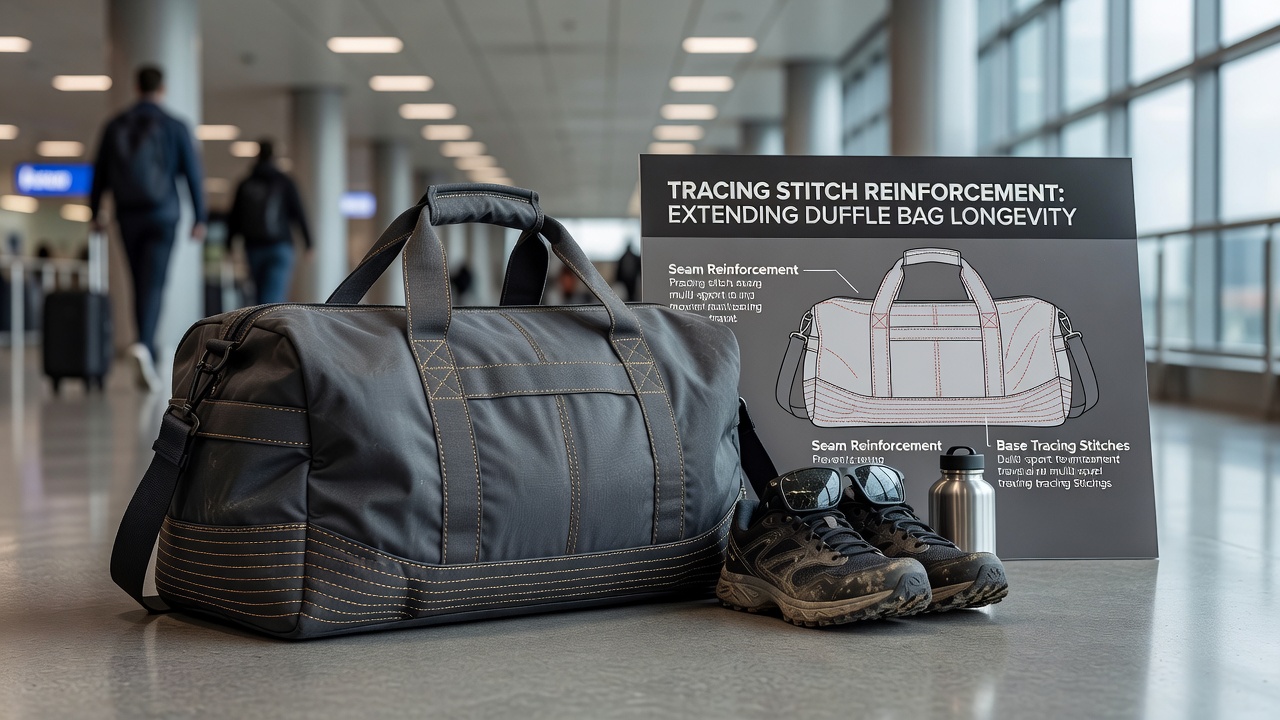
Observers note that traveling squads in August 2026 face compressed schedules across tournaments, which increases cumulative wear on equipment bags. Teams that select duffles with multi-row reinforcement at bottom seams report fewer mid-season failures, because the added stitching prevents fabric separation when bags are dragged or stacked. These patterns also accommodate mixed loads of balls, pads, and apparel without localized stress concentrations.
Field Performance Across Sports
Baseball, soccer, and basketball teams share similar bag requirements despite different primary gear, so manufacturers standardize reinforcement layouts that handle cylindrical and bulky items alike. Case studies from Canadian youth leagues document that duffle bags fitted with diamond-pattern stitching along length seams retained structural integrity after 200 transport cycles, whereas baseline bags showed seam separation at 120 cycles. The difference appears in reduced thread fray and maintained water resistance at the seam line.
Load-bearing tests conducted by CSA Group standards laboratories confirm that reinforced stitch configurations maintain tensile strength after exposure to repeated compression and shear forces typical of vehicle transport. Teams that rotate multiple bags across a season benefit from this consistency, since the reinforced zones prevent progressive weakening at attachment points.
Standards and Testing Benchmarks
Industry guidelines from ASTM International specify minimum stitch densities and pattern requirements for sports equipment carriers, and compliance testing includes cyclic loading that mimics tournament travel. Separate evaluations by CSA Group in Canada examine how reinforcement patterns perform under combined moisture and abrasion, conditions common during outdoor events. These benchmarks provide teams with measurable criteria when comparing bag options.
Conclusion
Stitch reinforcement patterns determine how multi-sport duffle bags withstand the demands of traveling youth teams. Data from standardized testing and field tracking demonstrate that targeted bar tacks, box-X, and multi-row configurations increase seam endurance and delay the onset of failure. Teams gain extended service intervals when they select bags engineered with these patterns, and ongoing standards work continues to refine the specifications that support reliable performance across seasons.