Tracing Advancements in Padding Materials for Football Shoulder Pads That Enhance Impact Distribution During Youth League Collisions
Written by Wendy Neumann · Aug 8, 2026
Tracing Advancements in Padding Materials for Football Shoulder Pads That Enhance Impact Distribution During Youth League Collisions
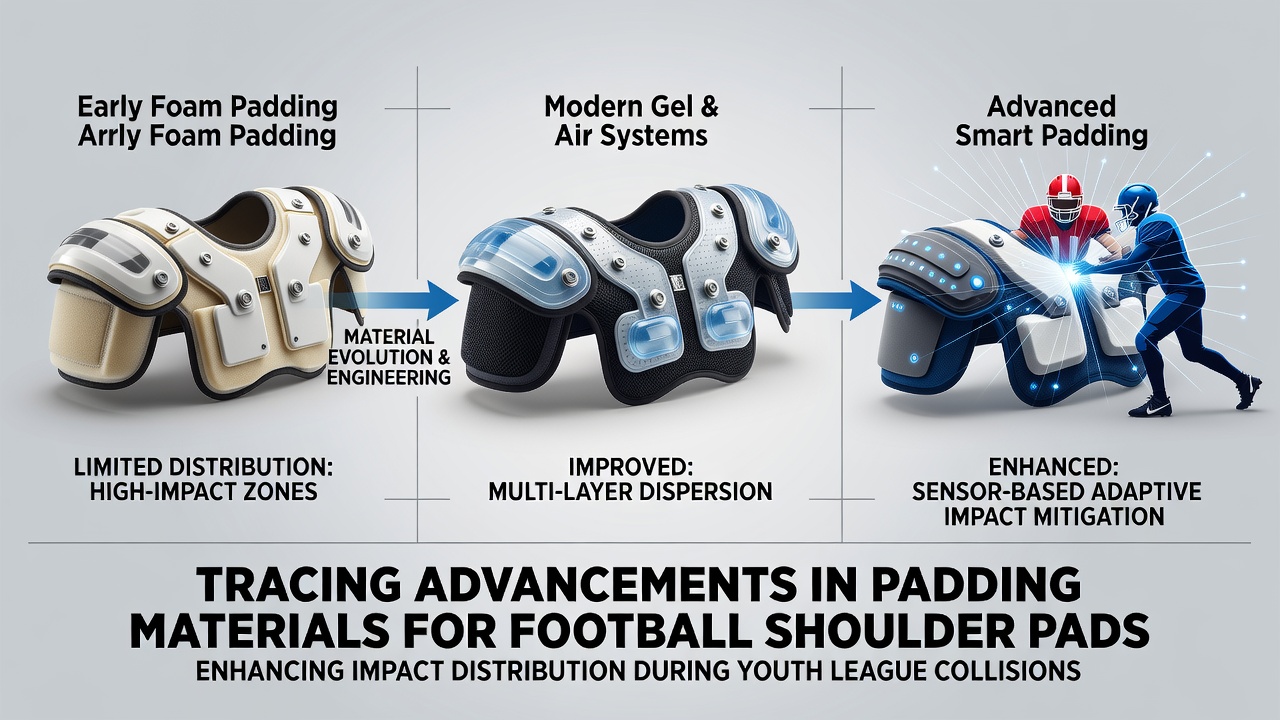
Football shoulder pads have evolved through decades of material research aimed at managing forces during collisions, and recent developments focus specifically on youth league applications where players experience repeated impacts at lower body masses yet still face risks of concentrated pressure points. Manufacturers have shifted from basic foam blocks toward engineered composites that spread energy across broader surface areas, reducing localized stress on shoulders and collarbones during tackles and blocks common in age-group games.
Early Padding Approaches and Their Limitations
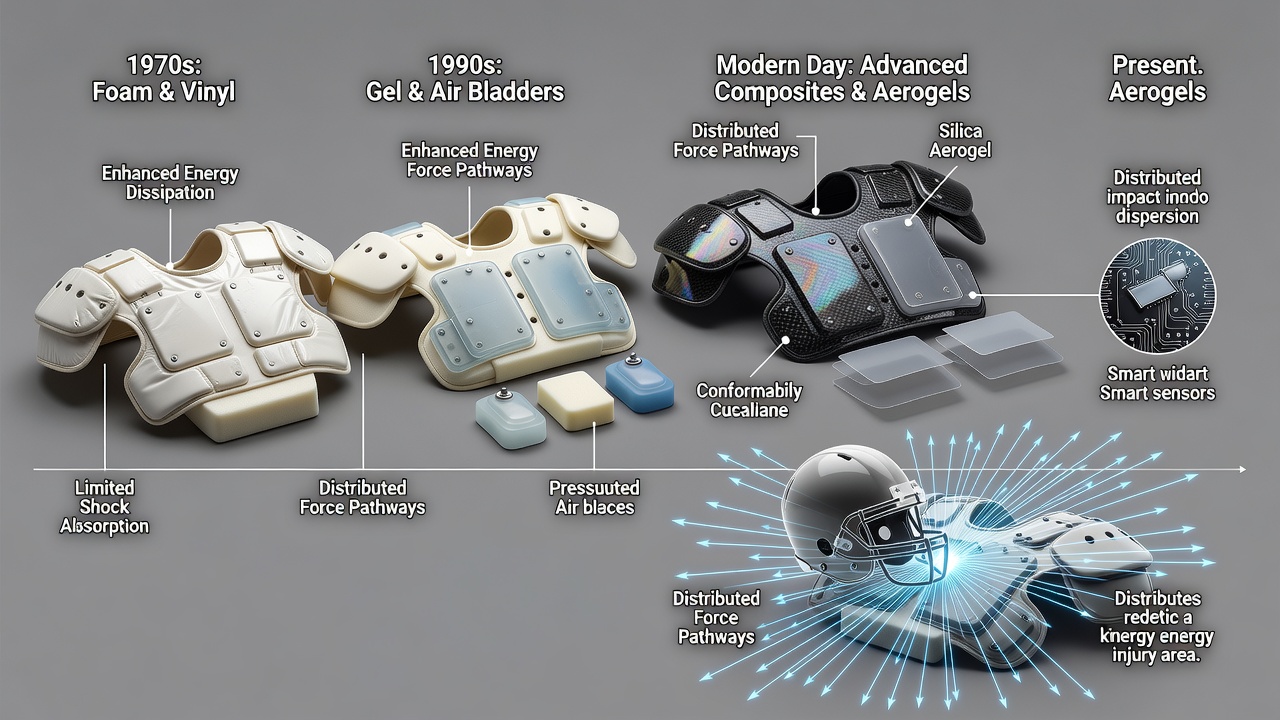
Initial designs relied on single-density polyurethane foams that absorbed some shock through compression, yet these materials often bottomed out under sustained force and created hard spots that transferred energy directly to the body. Teams in the 1980s and 1990s observed higher rates of contusions and joint strains because the pads failed to redirect loads laterally, prompting equipment suppliers to explore layered constructions that combined firmer outer shells with softer inner liners.
By the early 2000s researchers began incorporating ethylene-vinyl acetate blends with varying durometers, allowing the padding to deform progressively rather than collapse uniformly. Studies conducted at university biomechanics labs documented improved force dispersion when pads featured segmented channels that channeled impact energy outward instead of straight through the athlete's frame.
Introduction of Viscoelastic and Shear-Thickening Compounds
Contemporary advancements center on viscoelastic polymers and shear-thickening fluids that remain flexible during normal movement yet stiffen instantly upon rapid compression. These materials respond to the velocity of a collision, becoming more rigid precisely when youth players make contact at game speed, which helps distribute force over a wider area of the shoulder girdle. One manufacturer integrated dilatant compounds into molded inserts placed along the deltoid and acromion regions, resulting in measurable reductions in peak pressure readings during laboratory sled tests that simulated typical 12- to 14-year-old athlete impacts.
Data collected through instrumented dummy trials indicate that pads incorporating these compounds lower transmitted force by 18 to 25 percent compared with traditional EVA stacks, according to testing protocols referenced by ASTM International standards for athletic equipment. The fluid-filled chambers also allow the padding to recover its shape between plays, maintaining consistent performance throughout an entire game or practice session without the permanent compression seen in earlier foams.
Multi-Zone Layering Systems Adopted in 2026
As of August 2026 several youth equipment lines feature multi-zone layering that combines open-cell memory foam bases with closed-cell impact plates and thin gel interfaces. Each zone addresses different collision vectors: the gel layer conforms to body contours for even initial contact, the memory foam absorbs sustained pressure, and the outer plates spread high-speed strikes across the entire pad surface. League equipment managers report that these configurations reduce hot spots along the neck and upper arm, areas frequently cited in injury reports from prior seasons.
Independent evaluations coordinated by Canadian Sport Institute researchers tracked force distribution patterns across 200 youth participants wearing both legacy and updated pads. Their findings revealed that the newest multi-zone designs produced more uniform pressure maps, with maximum values dropping below thresholds associated with soft-tissue irritation in growing athletes. The study further noted that recovery times between repeated impacts shortened because the materials dissipated heat more effectively than single-density predecessors.
Regulatory Testing and Real-World Performance Tracking
Youth football governing bodies now require pads to meet updated impact attenuation criteria that emphasize lateral energy transfer rather than simple vertical compression. Manufacturers submit samples to third-party facilities where pendulum and drop-weight apparatuses simulate teh angled strikes typical of youth blocking schemes. Results feed into design iterations that refine foam densities and chamber geometries for specific age brackets.
Longitudinal monitoring programs operated by state athletic associations collect usage data from thousands of games each season, correlating pad models with reported shoulder incidents. Patterns emerging from these datasets show lower incidence rates among teams using pads with shear-responsive inserts, prompting additional suppliers to adopt similar technologies for the upcoming seasons.
Conclusion
Continued refinement of padding materials centers on matching the unique collision dynamics of youth football, where body mass differences and playing styles create distinct force profiles compared with adult leagues. Layered composites, viscoelastic inserts, and multi-zone constructions now form the core of modern shoulder pad engineering, supported by laboratory measurements and field observations that document improved load distribution. Equipment standards continue to evolve alongside these material advances, ensuring that protective gear keeps pace with the demands of growing athletes on the field.