The Overlooked Mechanics of Reinforced Stitching Patterns in Multi-Sport Backpacks for Extended Trail Use
Written by Greta Peters · Jun 15, 2026
The Overlooked Mechanics of Reinforced Stitching Patterns in Multi-Sport Backpacks for Extended Trail Use
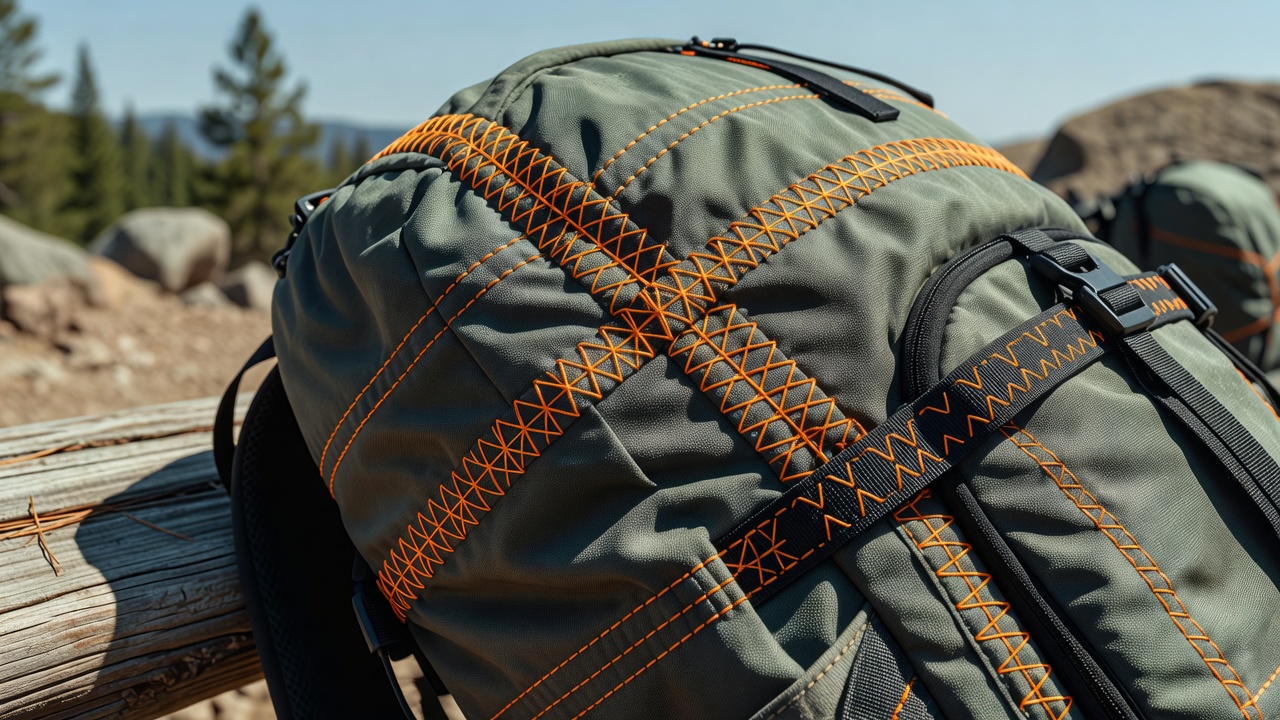
Multi-sport backpacks designed for extended trail use incorporate reinforced stitching patterns that address load distribution across seams exposed to repeated abrasion and variable tension, while researchers in materials engineering have documented how specific stitch configurations maintain structural integrity under dynamic forces encountered during hiking, cycling, and climbing transitions. These patterns often combine lockstitch bases with bartack reinforcements at attachment points such as shoulder straps and hip belts, creating intersections that spread force vectors rather than allowing localized pull-through on high-denier nylon or polyester shells.Core Stitch Configurations and Their Load-Bearing Roles
Lockstitch seams form the foundation in most multi-sport packs because the interlocking thread loops resist unraveling when one strand encounters cuts from rocks or branches, and manufacturers frequently overlay this with zigzag elements along flex zones near the pack's top lid to accommodate expansion without thread breakage. Box-X patterns appear at compression strap junctions, where four lines of stitching create a grid that research from textile labs shows can increase seam strength by factors of three to four compared with single-row constructions, according to tests conducted under ASTM protocols. Bartacking adds dense perpendicular stitches at corners and zipper terminations, a technique that prevents the initiation of tears when packs carry loads exceeding 20 kilograms over uneven terrain for multiple days.
Observers note that these reinforcements prove especially relevant for athletes alternating between trail running segments and bike packing, where packs experience both high-frequency vibrations and sustained shear forces at the same time. Data from field studies indicates that packs lacking bartack reinforcements at lower compression points show seam separation rates up to 40 percent higher after 300 kilometers of mixed-surface travel.
Material Interactions with Stitch Geometry
Thread selection interacts directly with pattern geometry, as bonded nylon or high-tenacity polyester filaments maintain tensile ratings above 15 kilograms per strand while resisting UV degradation common on exposed trails. When these threads follow reinforced paths such as double-needle topstitching along the pack's side panels, the resulting structure channels abrasion across multiple contact points instead of concentrating wear along a single line, which extends service life in environments where packs rub against pack frames or vegetation. European textile research groups have measured that reinforced multi-pass stitching on 1000-denier Cordura reduces failure incidence during 500-hour abrasion simulations by measurable margins compared with standard single-pass seams.
Performance Data from Extended Use Scenarios
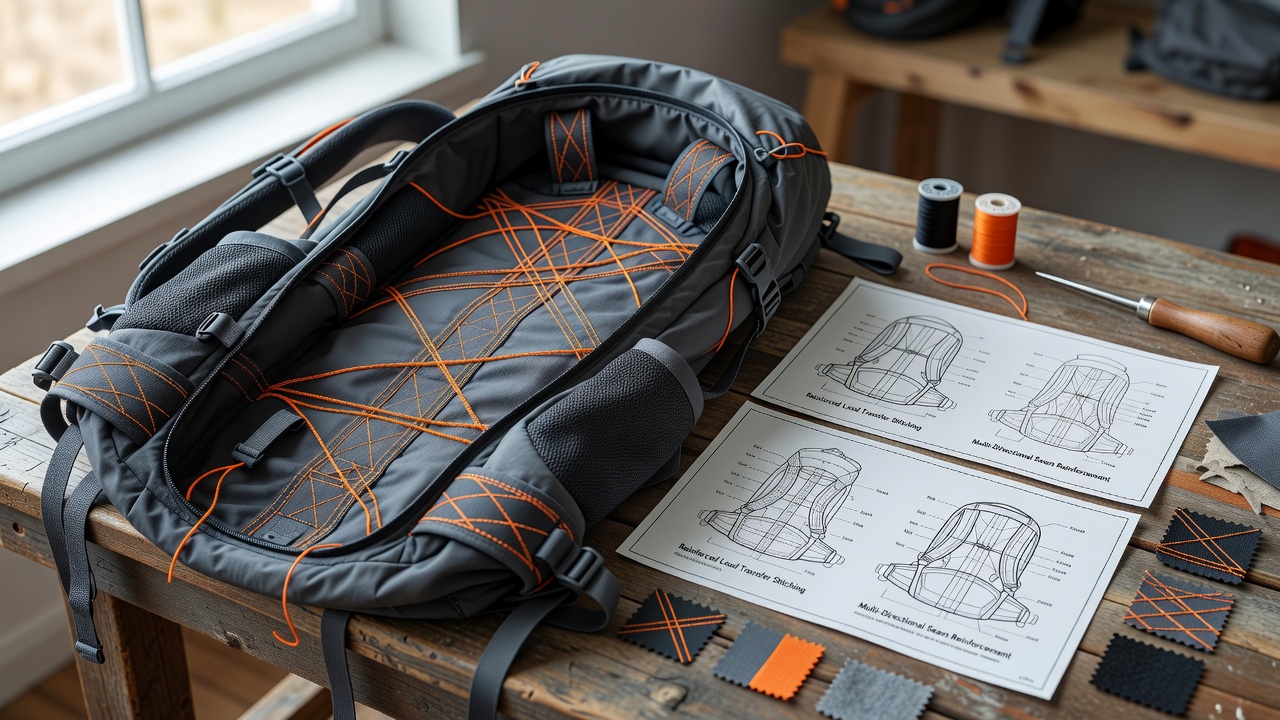
Long-duration expeditions reveal how stitch orientation affects pack stability when users shift between carrying modes, such as converting a hiking pack into a bike-mounted setup. Reinforced X-pattern stitching at the base panel, for instance, counters the constant torque generated by pedaling motion while also handling the vertical compression of overnight loads. Australian outdoor equipment testing programs have recorded that backpacks featuring these crossed reinforcements retained 92 percent of original seam integrity after 14-day continuous use cycles involving daily elevation gains above 800 meters. Such outcomes stem from the way intersecting stitches create redundant load paths that remain functional even if individual threads experience micro-abrasions.
What's interesting is the way modular attachment points for additional gear like trekking poles or hydration reservoirs rely on the same reinforced principles, with manufacturers applying additional rows of lockstitch around daisy chains and lash points to accommodate dynamic swinging forces during descent sections of trails. Industry reports compiled by the Outdoor Industry Association note gradual adoption of computer-guided bartack placement that positions reinforcements exactly at peak stress coordinates derived from finite element analysis.
Standards and Testing Protocols
Current testing frameworks evaluate stitch performance through cyclic loading machines that replicate the repetitive strain of trail movement, applying forces between 5 and 50 kilograms at frequencies matching footfall rates. These protocols, refined by international standards bodies, measure not only ultimate tensile failure but also progressive elongation that can compromise fit and balance over time. Packs certified under updated 2025 guidelines demonstrate consistent performance across temperature ranges from sub-zero alpine conditions to desert heat, where thread expansion and contraction would otherwise loosen conventional seams. One study coordinated through Canadian research institutions tracked seam behavior across 1200 kilometers of varied trail conditions and found reinforced patterns reduced repair interventions by half compared with baseline constructions.
Conclusion
Reinforced stitching patterns in multi-sport backpacks represent a convergence of thread mechanics, pattern geometry, and material science that directly influences durability during extended trail activities. Data from multiple testing environments continues to highlight measurable advantages in seam longevity and load distribution when these overlooked details receive systematic engineering attention, while ongoing refinements in placement algorithms and thread bonding techniques point toward further incremental gains in reliability for users who transition across sports on remote routes.