The Integration of Phase-Change Materials in Basketball Jerseys for Temperature Regulation
Written by Sam Lange · May 28, 2026
The Integration of Phase-Change Materials in Basketball Jerseys for Temperature Regulation
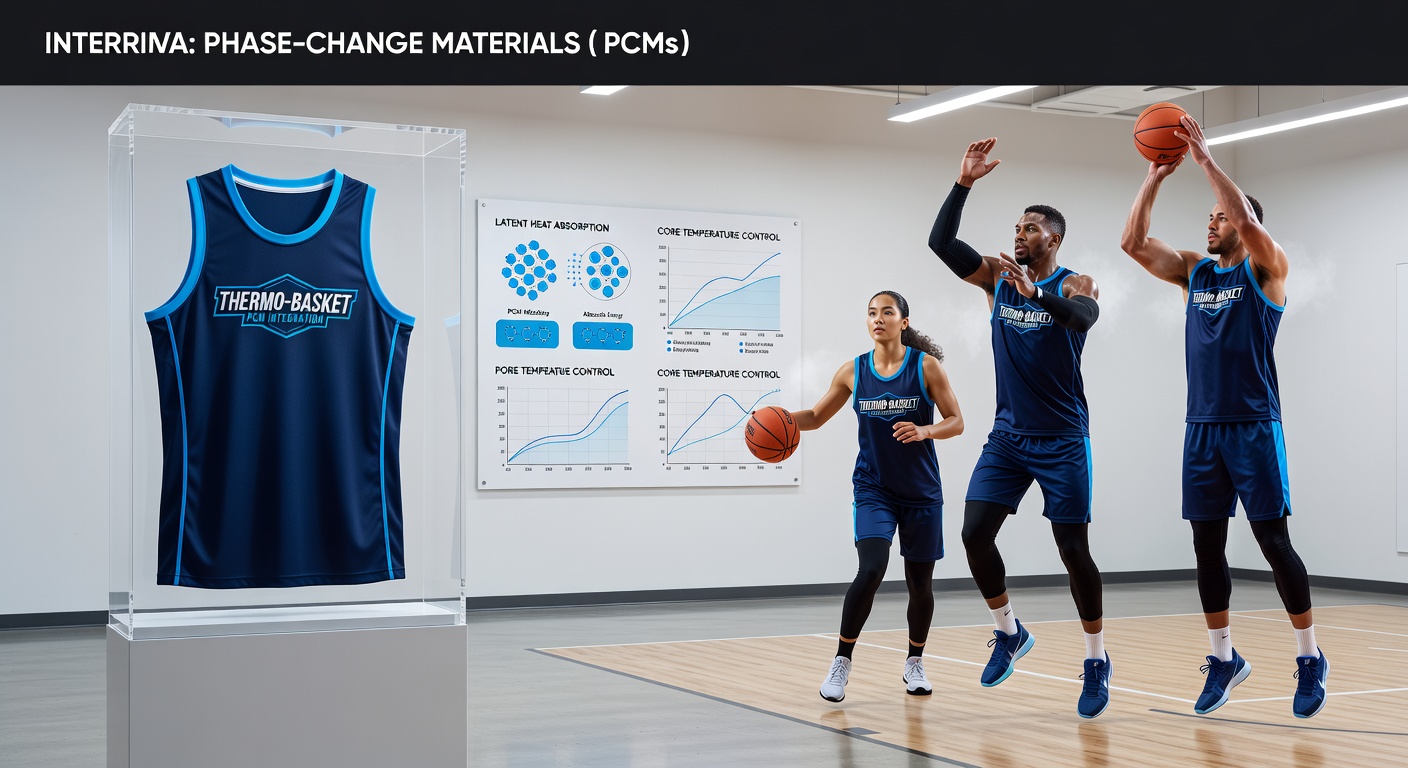
Basketball athletes generate substantial body heat during high-intensity periods on the court, and phase-change materials integrated into jersey fabrics provide a mechanism for absorbing and releasing thermal energy to help maintain more stable skin temperatures throughout games and practices. These materials operate by undergoing phase transitions at targeted temperature thresholds, typically between 28 and 35 degrees Celsius, which aligns with the range where human thermoregulation becomes stressed during prolonged activity.
Fundamentals of Phase-Change Materials in Textile Applications
Phase-change materials consist of substances such as paraffin waxes or salt hydrates that store latent heat as they shift between solid and liquid states, and manufacturers encapsulate these compounds in microscopic polymer shells before embedding them into fibers or applying them as coatings on athletic apparel. The process allows the materials to absorb excess heat when body temperatures rise during sprinting or defensive movements, then release stored energy as activity levels decrease and cooling becomes necessary. Research indicates that such microencapsulation prevents leakage while preserving the thermal cycling capacity over repeated wash cycles and extended use periods.
Developers first explored these compounds for aerospace needs before adapting them for consumer textiles, and textile engineers now combine them with synthetic polyester blends common in basketball uniforms to create garments that respond dynamically to environmental and physiological changes. Data from laboratory tests reveal that fabrics treated with phase-change additives can moderate temperature fluctuations by up to 2 to 4 degrees Celsius compared with untreated controls under simulated exercise conditions.
Implementation Techniques in Modern Basketball Apparel
Manufacturers incorporate phase-change materials through methods that include direct spinning into yarn, lamination between fabric layers, or printing onto inner surfaces that contact the skin, and each approach influences durability as well as heat transfer efficiency during repeated laundering. Basketball jerseys often feature these treatments concentrated in zones covering the torso and upper back, where sweat production and heat buildup reach peak levels during matches. Engineers calibrate the transition temperatures to match the demands of indoor court environments that range from 18 to 24 degrees Celsius ambient conditions while athletes maintain core temperatures near 37 degrees Celsius.
Performance Data and Athlete Testing Protocols
Controlled studies conducted on collegiate and professional players demonstrate measurable reductions in perceived exertion rates when participants wear jerseys containing phase-change elements, and heart rate recovery intervals shorten slightly during rest periods between quarters. Observers note that these garments complement existing ventilation designs without adding significant bulk or altering moisture-wicking properties that teams already rely upon. Figures from field trials conducted across multiple seasons show consistent thermal buffering effects even after 50 wash cycles, although the magnitude of temperature stabilization varies with individual sweat rates adn movement patterns.
Comparative Developments Across Sports Apparel Sectors
While basketball applications focus on rapid heat absorption during intermittent high-effort bursts, parallel research in other team sports examines how phase-change integrations interact with compression layers and antimicrobial treatments. One study published through academic channels examined PCM-enhanced base layers worn beneath standard uniforms and reported stable microclimate conditions that reduced the need for mid-game adjustments by coaching staff. The reality is that integration costs remain higher than conventional fabric treatments, yet production volumes have increased as suppliers scale microencapsulation processes for broader market availability.
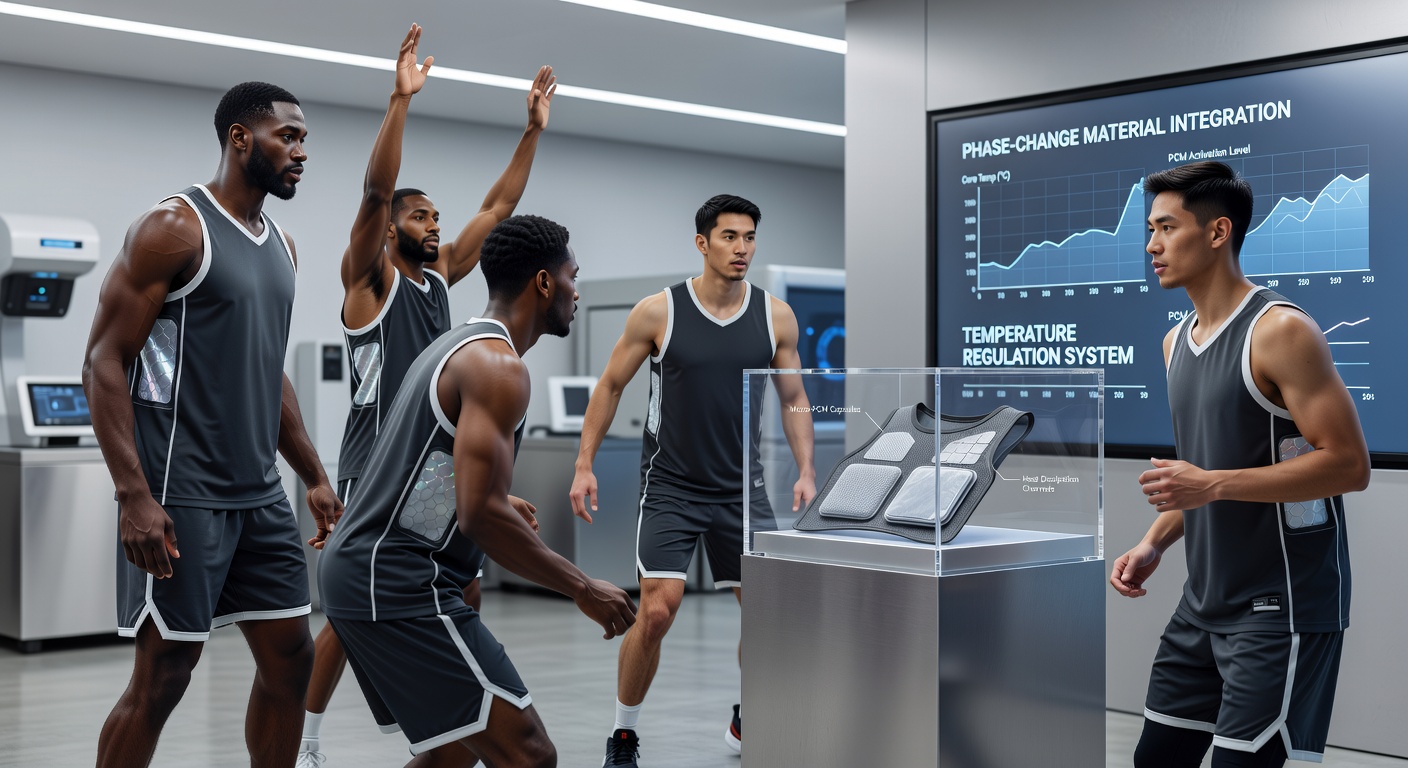
What's interesting is the way these materials interact with existing strategic ventilation patterns already present in many team uniforms, creating hybrid systems that manage both convective airflow and latent heat storage simultaneously. Researchers at institutions across North America and Europe continue to refine encapsulation shell compositions to extend the functional lifespan of treated garments under the mechanical stresses typical of competitive play.
Recent Advancements Observed in May 2026
By May 2026 several professional leagues began evaluating updated jersey prototypes that combine phase-change materials with embedded biometric threads capable of transmitting real-time skin temperature readings to sideline monitoring systems. According to reports from the U.S. Department of Energy, ongoing material science improvements have lowered the weight penalty associated with PCM loadings while increasing the total latent heat capacity per square meter of fabric. Teams testing these versions report that players maintain more consistent performance metrics during late-game scenarios when ambient humidity inside arenas rises and traditional cooling methods prove less effective.
Additional trials coordinated through international sports science networks examined how phase-change treated apparel performs during travel across different climate zones, and preliminary data suggest reduced incidence of heat-related fatigue complaints among athletes adapting to new venues. The approach builds upon earlier textile innovations without replacing established design elements such as moisture management finishes or stretch recovery properties.
Conclusion
Integration of phase-change materials into basketball jerseys represents a targeted advancement in thermal management technology that addresses specific physiological challenges faced by athletes during competition. Continued refinement of encapsulation methods and fabric integration techniques supports broader adoption as manufacturing scales and performance data accumulates across multiple seasons. Observers expect further evolution in material formulations that align more precisely with the variable intensity profiles characteristic of basketball gameplay.