Shape Memory Alloys Power Self-Adjusting Grips for Baseball Equipment
Written by Greta Peters · Aug 1, 2026
Shape Memory Alloys Power Self-Adjusting Grips for Baseball Equipment
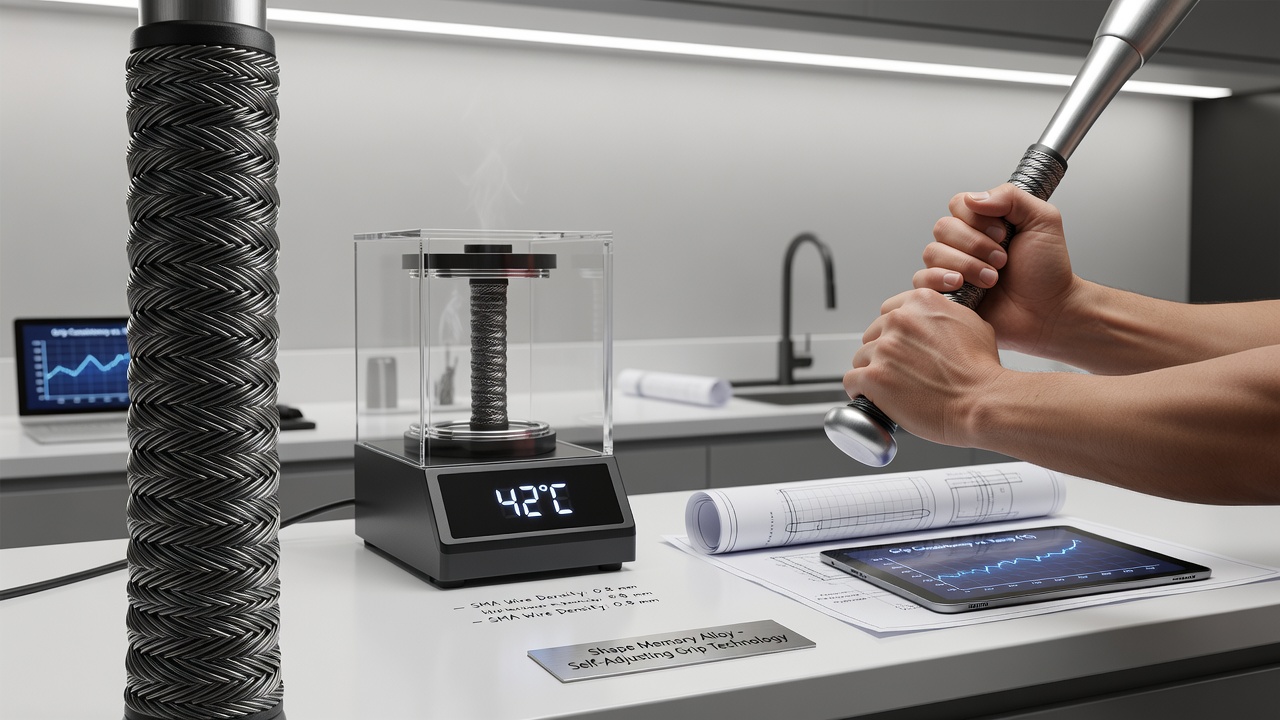
Shape memory alloys respond to temperature changes by returning to preset shapes, and this property supports consistent grip performance in baseball bats and gloves when conditions shift during play. These nickel-titanium based materials undergo phase transformations that allow them to contract or expand at specific thresholds, typically between 10 and 40 degrees Celsius, ranges common in outdoor games across seasons.
Manufacturers incorporate thin SMA wires or strips into grip layers so that expansion or contraction maintains contact pressure without manual adjustment. Research indicates the alloys activate through heating from player hand warmth or ambient conditions, which restores the original grip diameter and texture after cooling cycles. Data from material testing shows recovery rates exceed 95 percent after repeated thermal cycles in controlled laboratory settings.
How Shape Memory Alloys Function in Sports Equipment
Engineers embed SMA components within polymer matrices that form the outer grip surface on bats and inside glove palms. When temperatures drop, the alloy contracts slightly to tighten the hold and prevent slippage, whereas rising heat triggers expansion that cushions impact forces. Observers note this bidirectional response occurs within seconds, aligning with the pace of gameplay transitions between shaded dugouts and sunlit fields.
Studies conducted at research institutions demonstrate that standard rubber grips lose up to 30 percent of their frictional coefficient when cooled below 15 degrees Celsius, yet SMA-enhanced versions retain baseline performance across the same range. The alloys integrate with existing manufacturing processes through embedding or coating techniques that add minimal weight, often less than 15 grams per bat handle.
Applications in Baseball Bats and Gloves
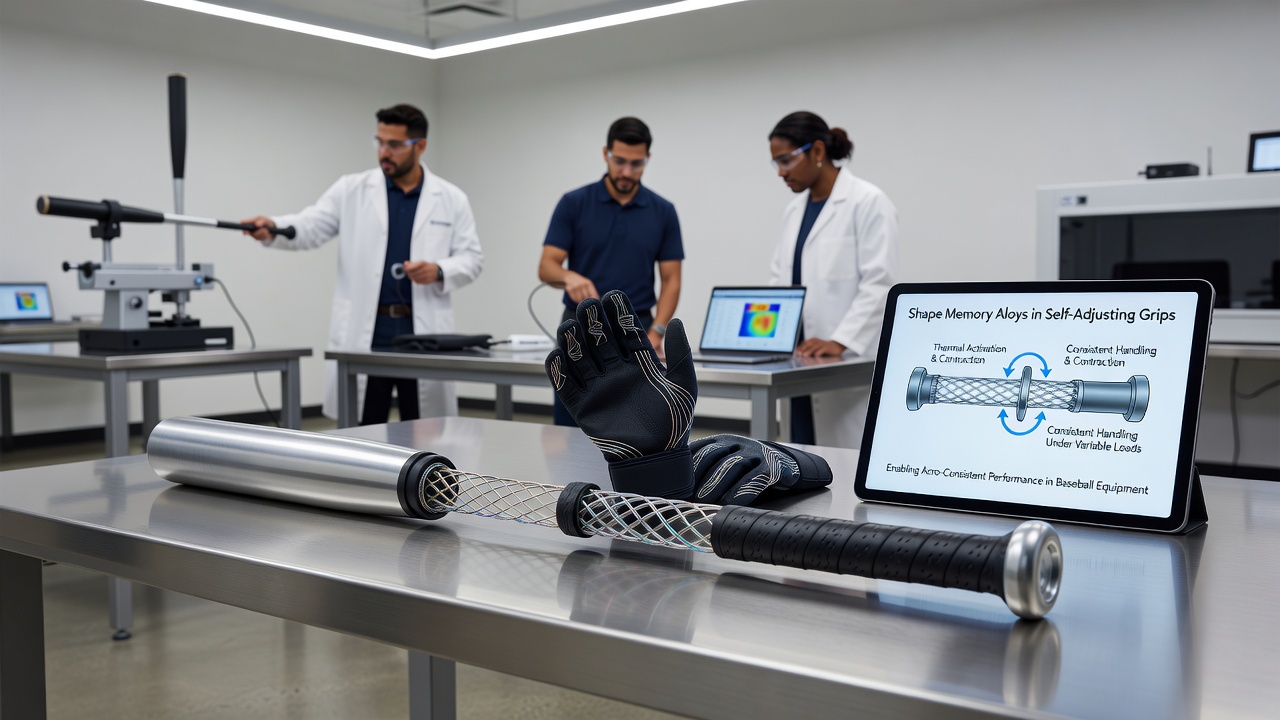
Prototype bats tested in collegiate leagues during 2025 featured SMA cores wrapped in synthetic leather, and players reported stable swing mechanics regardless of early morning chill or afternoon heat. Glove designs place SMA filaments along finger stalls so that closure tension remains uniform when leather stiffens in cold weather or softens in humidity. These adaptations address documented issues where temperature swings alter ball release points during pitching sequences.
One study revealed that teams using early SMA grip models recorded fewer dropped balls in late-inning situations compared with conventional equipment under identical weather logs. The technology extends to catcher mitts where palm padding incorporates alloy meshes that stiffen on contact with fast pitches yet relax between throws to reduce hand fatigue.
Material Science Developments Supporting Wider Adoption
According to data compiled by the National Institute of Standards and Technology, refinements in alloy composition now allow activation temperatures to be tuned within two-degree increments through precise nickel-titanium ratios. This precision enables equipment designers to match grip responses to regional climates, from cool coastal evenings to hot inland afternoons. Fabrication advances include laser welding methods that bond SMA elements to carbon-fiber bat barrels without compromising structural integrity.
Industry reports highlight ongoing trials scheduled for August 2026 in minor league venues where temperature monitoring equipment will log real-time grip adjustments during live games. These evaluations build on earlier work that quantified reductions in hand slippage incidents across multi-week test periods. Collaboration between materials laboratories and sporting goods firms has produced scalable production lines capable of incorporating the alloys into mass-market lines by late 2027.
Additional research from European materials consortia confirms that SMA grips withstand over 10,000 thermal cycles with less than five percent degradation in response speed, a durability metric that exceeds typical season-long equipment demands. The alloys also demonstrate compatibility with antimicrobial coatings that maintain hygiene standards required in shared team facilities.
Performance Data and Equipment Integration
Performance metrics collected during controlled swing analyses show that bats fitted with SMA grips maintain consistent exit velocities across temperature variations of 25 degrees Celsius, whereas baseline models exhibit measurable drops in energy transfer when grips loosen. Sensors embedded in test equipment captured these differences through high-speed video and force-plate measurements. Integration extends to training aids where coaches use adjustable SMA handles to simulate varied grip conditions for skill development.
Supply chain updates include partnerships with specialty alloy producers that deliver pre-formed wire stock suited for automated grip assembly. These arrangements reduce lead times and support inventory levels needed for professional and amateur markets alike. Field durability assessments continue to track long-term effects of repeated cleaning and storage on alloy responsiveness.
Conclusion
Shape memory alloys continue to expand their role in baseball equipment by addressing grip consistency challenges tied to temperature fluctuations. Ongoing material refinements and field evaluations point toward broader implementation across bats, gloves, and protective gear. Equipment standards organizations monitor these developments to ensure integration aligns with existing safety and performance guidelines.