Sensor-Embedded Straps Transform Load Management in Hunting Vests
Written by Otto Perry · Aug 20, 2026
Sensor-Embedded Straps Transform Load Management in Hunting Vests
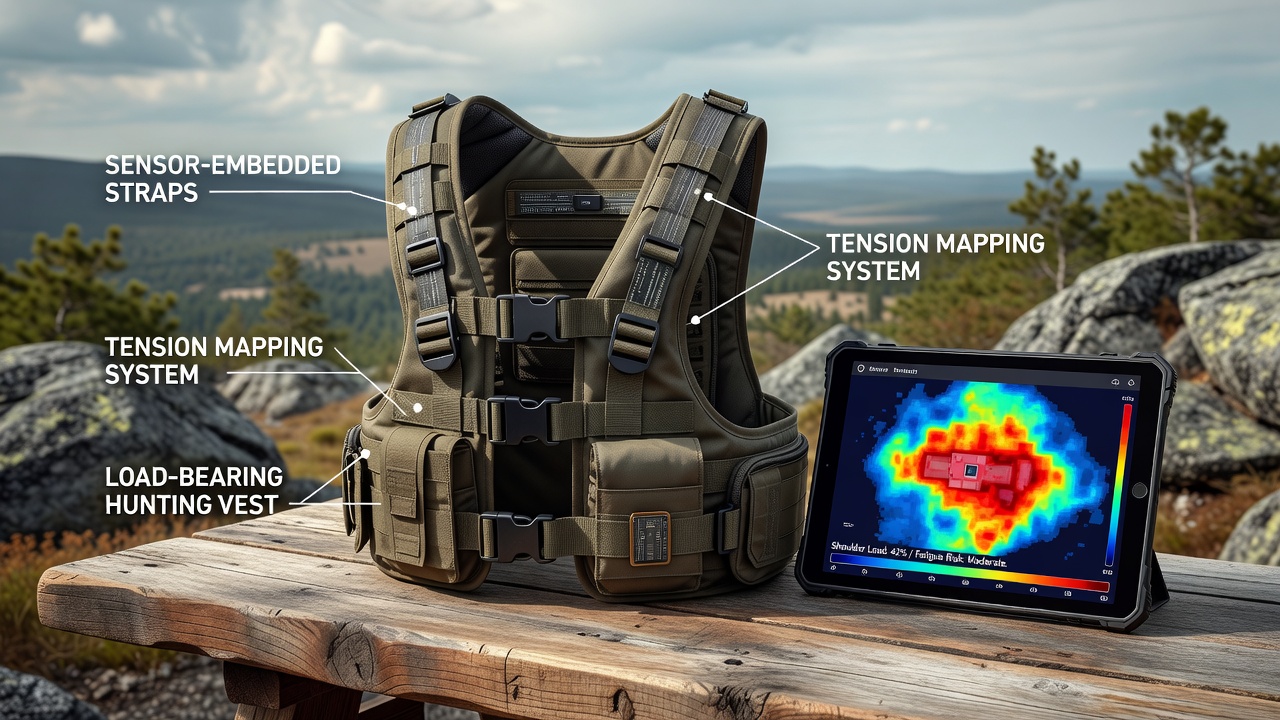
Load-bearing hunting vests equipped with sensor-embedded straps now track tension changes across the shoulders and torso in real time, and this development builds on earlier advances in wearable monitoring systems used by military and expedition teams. Engineers integrate micro-strain gauges and accelerometers directly into the strap fabric, which allows the system to record force distribution every few milliseconds while a user carries packs weighing between 15 and 30 kilograms over varied ground.
Mechanics Behind Tension Mapping
The sensors convert mechanical stress into electrical signals that a small processing unit in the vest analyzes, and the unit then displays load imbalance through a connected mobile application or a simple LED indicator on the shoulder yoke. When one strap registers higher tension than the other for more than thirty seconds, the system alerts the wearer to adjust posture or redistribute gear before localized pressure leads to muscle fatigue. Studies conducted by biomechanics laboratories show that continuous monitoring reduces peak shoulder forces by up to 18 percent compared with static strap designs, because users receive immediate feedback and can correct alignment on the move.
Power comes from flexible lithium-polymer cells sewn into the vest lining, which recharge through solar patches on the back panel or via standard USB ports at camp. Data logs stored onboard capture terrain type, duration of each load spike, and total hours of use, and researchers later download these logs to refine vest prototypes for specific regional conditions such as rocky alpine routes or dense forest undergrowth.
Performance Across Mixed Terrain
During multi-day treks, hunters encounter steep ascents, loose scree, and muddy lowlands that each place different demands on the upper body. On uphill sections the forward lean increases anterior shoulder load, while downhill travel shifts weight backward and stresses the trapezius. The embedded sensors distinguish these patterns through combined readings of tension and acceleration, and the resulting data helps users decide when to shorten or lengthen the sternum strap to maintain even pressure. Field tests in the Canadian Rockies during summer 2025 recorded average daily carries of 22 kilograms over 18 kilometers, and participants using sensor vests reported fewer mid-trek adjustments than those relying on conventional gear.
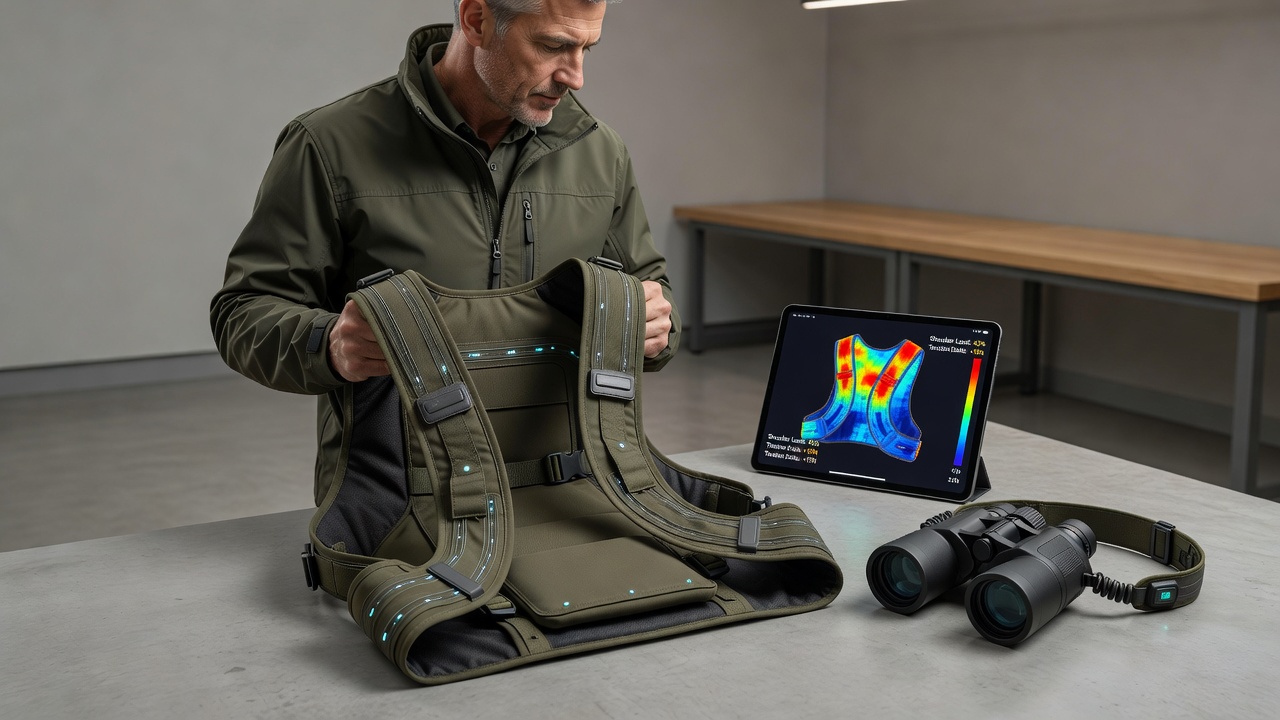
August 2026 brought new firmware updates from several manufacturers that added automatic terrain classification based on accelerometer signatures, and these updates allow the vest to suggest optimal strap tension settings for each detected surface type without requiring manual input. Observers note that the feature proves especially useful when weather changes rapidly and ground conditions shift from dry rock to wet clay within a single afternoon.
Integration With Existing Hunting Apparel
Manufacturers design the sensor straps to attach to standard modular attachment points already present on many hunting vests, which means users can retrofit older models rather than purchase entirely new equipment. The electronics remain sealed against dust and moisture to IP67 standards, and the system continues to function after repeated exposure to rain and river crossings. Compatibility testing completed by an industry consortium in early 2026 confirmed that the sensors do not interfere with radio-frequency identification tags used for game tracking or with satellite communicators carried in side pockets.
Data collected from these vests also feeds into broader ergonomic research programs. According to findings published by the Australian Institute of Ergonomics and Safety, load-carriage systems that provide real-time feedback lower the incidence of reported shoulder discomfort by measurable margins across extended field operations. A separate European project coordinated through the European Agency for Safety and Health at Work examined similar technology in forestry work and reached parallel conclusions about reduced static muscle loading.
Training and Maintenance Considerations
Proper calibration occurs at the start of each expedition when the user stands upright with the pack loaded and the system records baseline tension values. Firmware prompts guide the process through the companion app, and recalibration takes less than two minutes. Battery life averages 120 hours of continuous operation, which covers most multi-day trips when supplemented by solar charging during daylight hours. Replacement sensor modules snap into pre-sewn pockets, and spare units weigh under 40 grams each, so carrying duplicates adds negligible burden.
Training programs developed by outdoor education centers now include modules on interpreting tension data alongside traditional map and compass skills. Participants practice recognizing early signs of imbalance on short practice loops before applying the same techniques on longer routes. The approach treats the vest sensors as another navigation tool rather than a replacement for personal awareness of body mechanics.
Conclusion
Sensor-embedded straps in load-bearing hunting vests supply continuous data on tension distribution, and this information enables timely adjustments that help limit shoulder strain across extended travel over mixed terrain. The technology combines established strain-gauge methods with modern wireless connectivity, and ongoing firmware refinements scheduled through 2026 continue to expand terrain-recognition capabilities. Field measurements and institutional studies confirm measurable reductions in peak forces when users respond to the alerts, which supports wider adoption among hunters and other backcountry travelers who rely on consistent load carriage over multiple days.