Oscillation Control Fabrics: How Compression Materials Stabilize Limbs During Explosive Volleyball Movements
Written by Greta Peters · Jul 9, 2026
Oscillation Control Fabrics: How Compression Materials Stabilize Limbs During Explosive Volleyball Movements
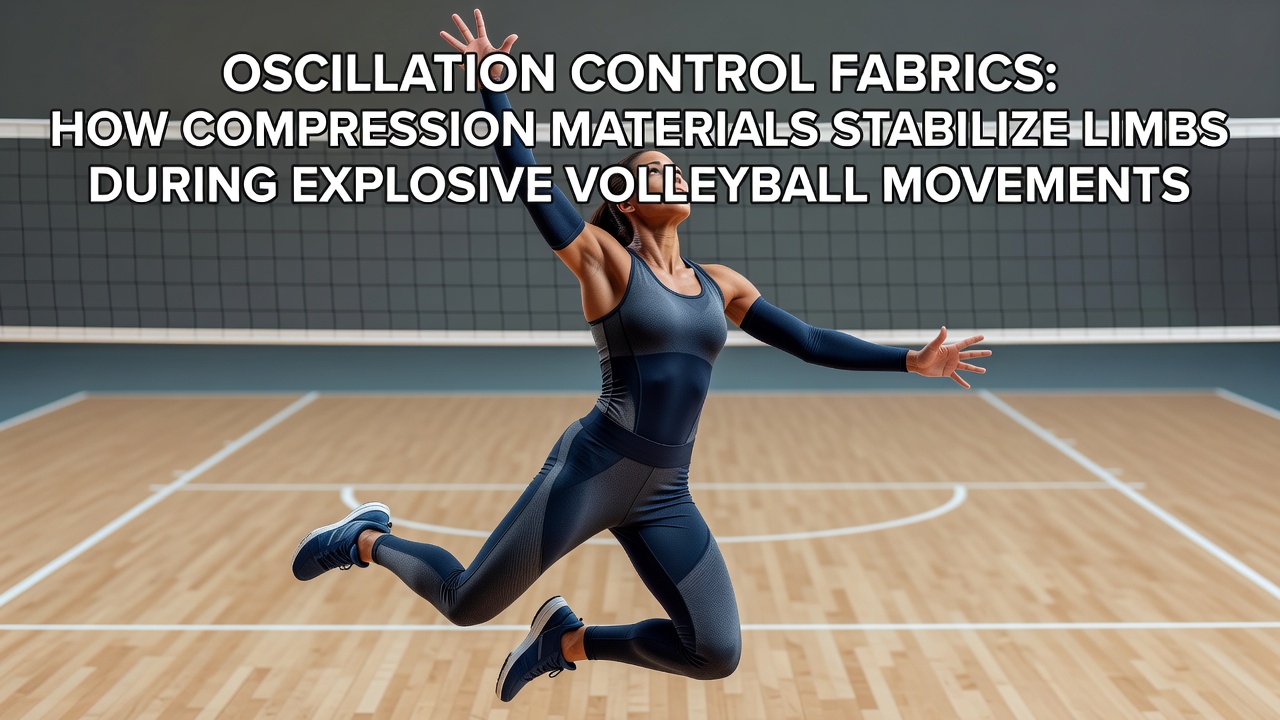
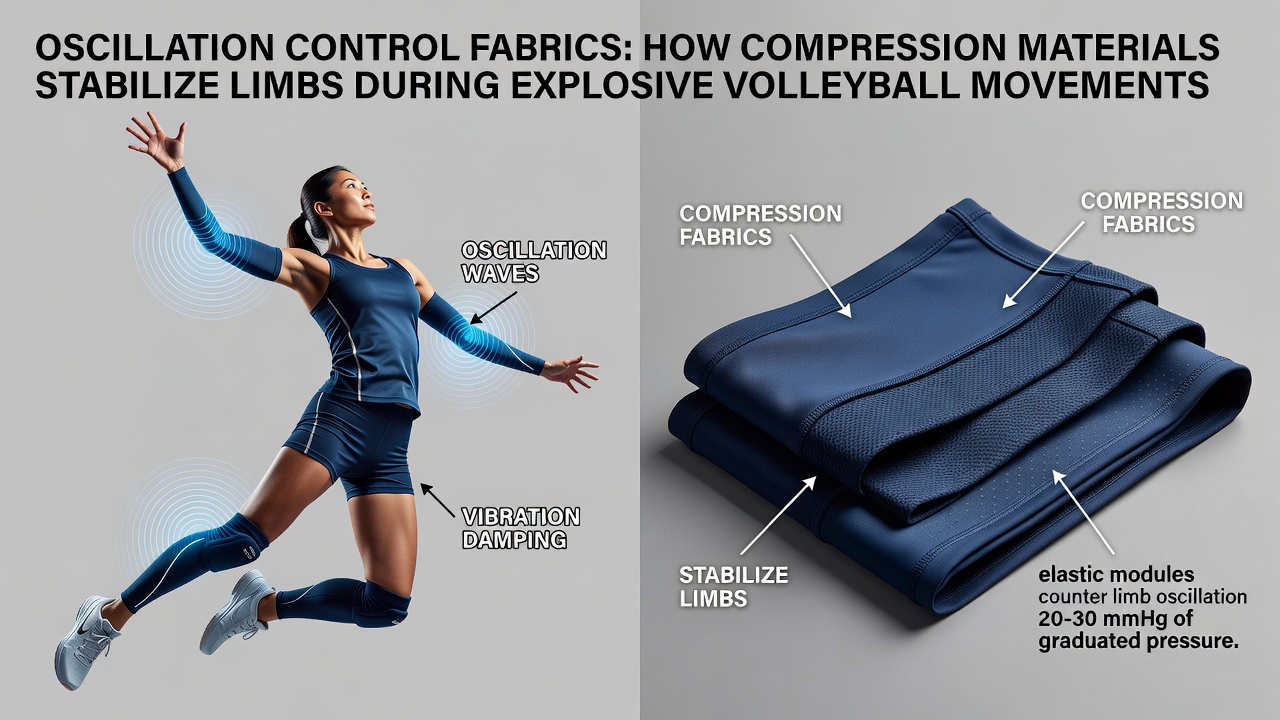
Volleyball demands rapid acceleration and deceleration that generate significant limb oscillation during spikes, blocks, and dives, and oscillation control fabrics address this through targeted compression materials designed to limit unwanted movement. These fabrics combine graduated pressure zones with elastic yarns that respond to muscle vibrations, which researchers have measured at frequencies between 8 and 25 hertz during high-intensity rallies. Data from biomechanical studies indicate that controlled compression reduces peak oscillation amplitudes by 15 to 30 percent compared with standard athletic wear, allowing athletes to maintain joint alignment under repeated impact loads.
Mechanics Behind Limb Stabilization
Compression materials work by applying consistent external pressure that increases tissue stiffness and shortens the time muscles spend in eccentric contraction phases. When a player lands from a vertical jump, the quadriceps and calves experience rapid lengthening followed by explosive shortening, and the fabric layers resist transverse muscle displacement that would otherwise dissipate force. Engineers achieve this through multi-directional knit structures that incorporate elastane filaments oriented along both longitudinal and circumferential axes, creating a sleeve-like effect that follows limb contours without restricting range of motion. Observers note that such designs also channel blood flow more efficiently during prolonged matches, which helps delay fatigue onset in the later sets of five-set contests.
Material Composition and Performance Data
Modern oscillation control garments typically blend nylon or polyester base yarns with 15 to 25 percent elastane, sometimes augmented by silicone-infused threads that add localized friction against the skin. Laboratory tests conducted by sports engineering groups show that fabrics with graduated compression profiles—tightest at distal points and progressively looser toward proximal areas—deliver superior stabilization during lateral movements common in defensive volleyball positions. In one series of trials involving collegiate athletes, participants wearing these sleeves recorded lower electromyography readings in stabilizing muscle groups, suggesting reduced energy expenditure to maintain posture after each explosive action. July 2026 schedules for major international tournaments will likely feature increased adoption of these garments as teams prepare for extended pool-play formats that place additional demands on recovery between matches.
Application to Volleyball-Specific Movements
Explosive arm swings during attacking sequences create high-frequency oscillations at the shoulder and elbow that can lead to micro-instabilities over multiple repetitions, and compression sleeves fitted with oscillation-dampening panels mitigate these effects by anchoring soft tissue to underlying bone structures. Defenders who execute repeated sprawls and rolls benefit similarly when lower-body garments incorporate reinforced panels around the knee and ankle, where impact forces transmit directly through the kinetic chain. Those who have analyzed match footage observe that athletes wearing such equipment often display more consistent approach angles on jumps because the fabric reduces compensatory adjustments caused by limb wobble. Professional leagues have begun specifying performance thresholds for compression apparel in equipment regulations, prompting manufacturers to refine weave densities that balance stabilization with breathability during high-heat indoor environments.
Integration With Training Protocols
Coaches incorporate oscillation control fabrics into both practice and competition settings to support progressive loading programs that target power development while minimizing soft-tissue stress. Athletes who train with these garments frequently report improved proprioceptive feedback, which translates into sharper positioning during net play and quicker recovery steps after blocks. Research conducted through partnerships between universities and national volleyball federations demonstrates measurable improvements in vertical leap consistency when compression layers are worn during plyometric sessions, with reductions in ground-contact time averaging 40 milliseconds across repeated trials. Equipment designers continue to iterate on seam placements and panel orientations to avoid pressure points that could interfere with circulation during long tournament weekends.
Future Developments and Monitoring
Emerging versions embed thin conductive threads that allow real-time monitoring of muscle oscillation patterns, feeding data to coaching staff via connected applications. These systems track changes in stabilization effectiveness across sets and alert trainers when compression levels begin to degrade due to fabric fatigue. Organizations such as the International Society of Biomechanics in Sports have published guidelines recommending periodic assessment of garment integrity to ensure continued performance benefits. Meanwhile, European research consortia funded through Horizon programs are examining how recycled polymer blends can maintain the same oscillation control properties while meeting sustainability targets set for 2027 equipment standards.
Conclusion
Oscillation control fabrics represent a measurable advancement in how compression materials interact with the biomechanical demands of volleyball, delivering targeted stabilization that supports both performance consistency and injury-risk reduction across competitive levels. As data collection improves and manufacturing techniques evolve, these garments will continue to integrate more precisely with the movement profiles that define modern play. Athletes and support staff gain practical advantages from understanding the specific fabric properties that align with their positional requirements and training cycles.