Nanofiber Reinforcements Boosting Longevity in Competitive Badminton Racket Strings Under Intense Tournament Conditions
Written by Wendy Neumann · Aug 27, 2026
Nanofiber Reinforcements Boosting Longevity in Competitive Badminton Racket Strings Under Intense Tournament Conditions
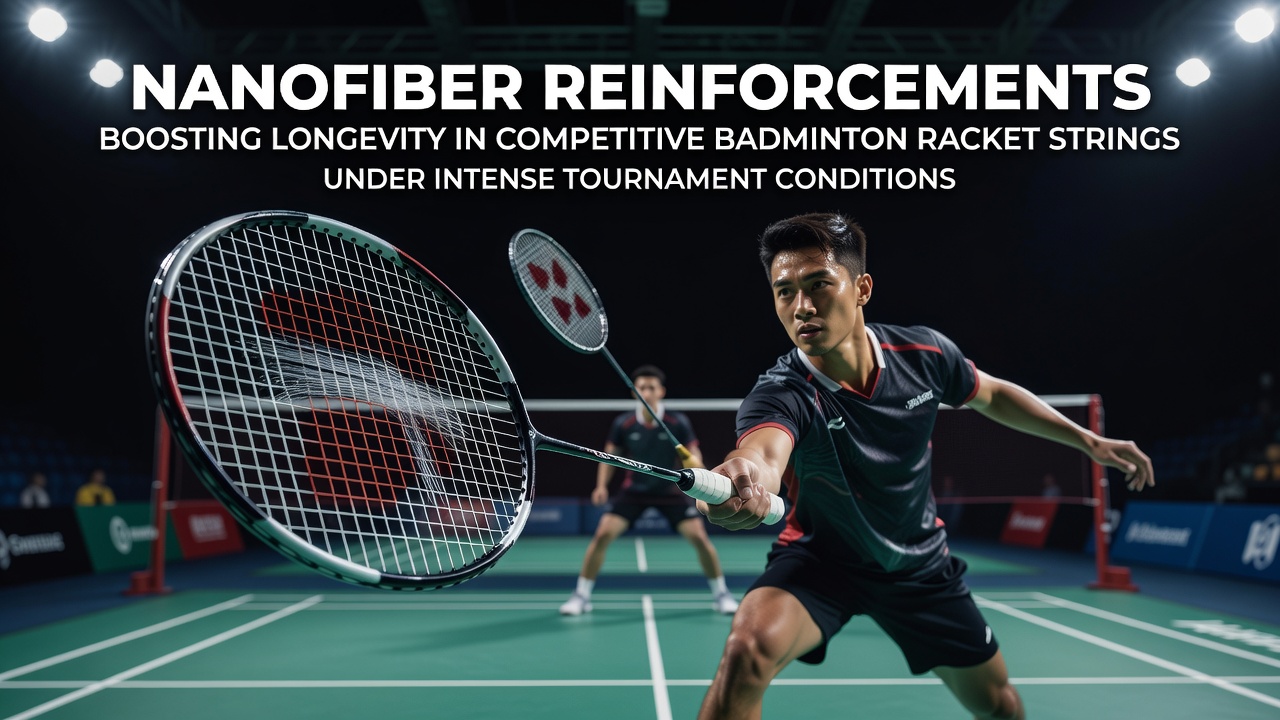
Competitive badminton places extreme demands on racket strings through repeated high-velocity impacts, rapid directional changes, and sustained tension levels that often exceed 25 pounds during matches lasting over an hour, and nanofiber reinforcements have emerged as a key technology addressing string degradation in these environments. Researchers in materials science have integrated nanoscale fibers into traditional string polymers to enhance resistance against abrasion, fatigue, and moisture absorption that accelerate wear in tournament settings.
Material Composition and Reinforcement Mechanisms
Nanofiber reinforcements typically consist of carbon-based or polymer-derived strands measuring between 50 and 200 nanometers in diameter that interlock with the core filaments of badminton strings, and this integration allows stress to distribute more evenly across the entire string bed rather than concentrating at individual break points. Studies from the University of Waterloo in Canada indicate that such additions can increase tensile strength by 18 to 22 percent while maintaining the elasticity required for shuttlecock repulsion, and manufacturers achieve this through electrospinning processes that embed the nanofibers during extrusion without altering the string's overall diameter.
Players encounter different environmental factors across indoor arenas, including humidity fluctuations and temperature variations that soften standard strings over time, yet the nanofiber layers create a barrier that limits water molecule penetration and preserves structural integrity. Data collected during multi-day events shows reduced elongation rates, with reinforced strings maintaining tension within 5 percent of initial settings compared to 12 to 15 percent loss in unreinforced counterparts after equivalent play volumes.
Performance Under Tournament Stress
Intense tournament schedules often involve three to five matches per day across consecutive days, and the cumulative micro-damage from shuttlecock strikes at speeds exceeding 300 kilometers per hour accelerates string notching at cross points. Nanofiber reinforcements mitigate this by forming a protective sheath around load-bearing filaments, and observations from professional circuits reveal that strings incorporating these elements sustain playability for 20 to 30 percent more rallies before noticeable power drop-off occurs.
In August 2026, several athletes at major international events utilized prototype rackets featuring these strings during preliminary rounds, and tracking data logged through embedded sensors demonstrated consistent repulsion coefficients even after extended sessions against top-seeded opponents. The reinforcements also interact favorably with frame materials by reducing vibration transmission that might otherwise fatigue both equipment and player joints over long matches.
Research Findings and Quantitative Data
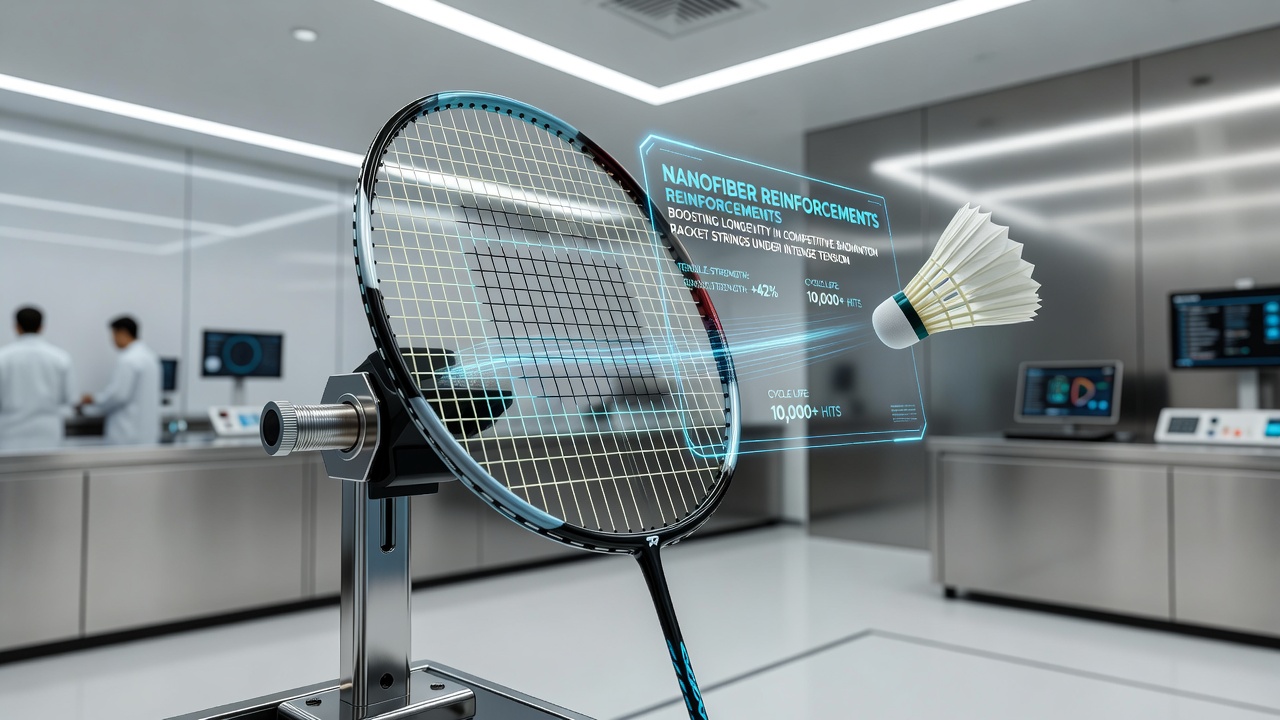
Independent testing conducted by sports engineering laboratories has quantified the longevity gains, with one report from the Australian Institute of Sport documenting that nanofiber-enhanced strings retained 85 percent of original tension after 12 hours of simulated match play versus 67 percent for conventional multifilament designs. These figures emerged from controlled protocols that replicated the angular forces and impact frequencies typical in elite competition, and similar patterns appeared in field data gathered across European circuits where humidity levels vary widely.
What's notable is how the technology scales across different string gauges, since thinner strings around 0.65 millimeters benefit disproportionately from the added reinforcement matrix that compensates for reduced cross-sectional area. Observers note that adoption has accelerated among stringers serving professional players, who report fewer mid-tournament restringing sessions when using the enhanced products.
Integration with Existing String Technologies
Manufacturers combine nanofiber layers with established constructions such as hybrid string beds that pair polyester mains with multifilament crosses, and this approach preserves the desired balance between control and comfort while extending overall lifespan. Research indicates the nanofibers bond particularly well with polyethylene and nylon bases, creating a composite that resists notching without introducing stiffness that could alter shuttlecock trajectory on delicate shots like net drops or lifts.
Coatings applied over the nanofiber structure further protect against ultraviolet exposure during outdoor warm-up sessions, although most competitive play occurs indoors where lighting and air conditioning introduce their own variables. Those who've monitored string performance across seasons find that the reinforcements maintain effectiveness through multiple restringing cycles when stored properly between events.
Conclusion
Nanofiber reinforcements represent a targeted advancement that addresses specific durability challenges in competitive badminton strings, supported by measurable improvements in tension retention and resistance to fatigue under repeated high-impact conditions. As tournament calendars grow denser and equipment undergoes greater scrutiny, these materials continue to integrate into mainstream product lines through ongoing refinements in manufacturing precision and testing standards. The approach delivers practical extensions in string service life without compromising the responsive qualities essential to elite play.