Material innovations in bio-based foams reshape custom fitting processes for baseball catcher gear across professional leagues
Written by Wendy Neumann · Jun 1, 2026
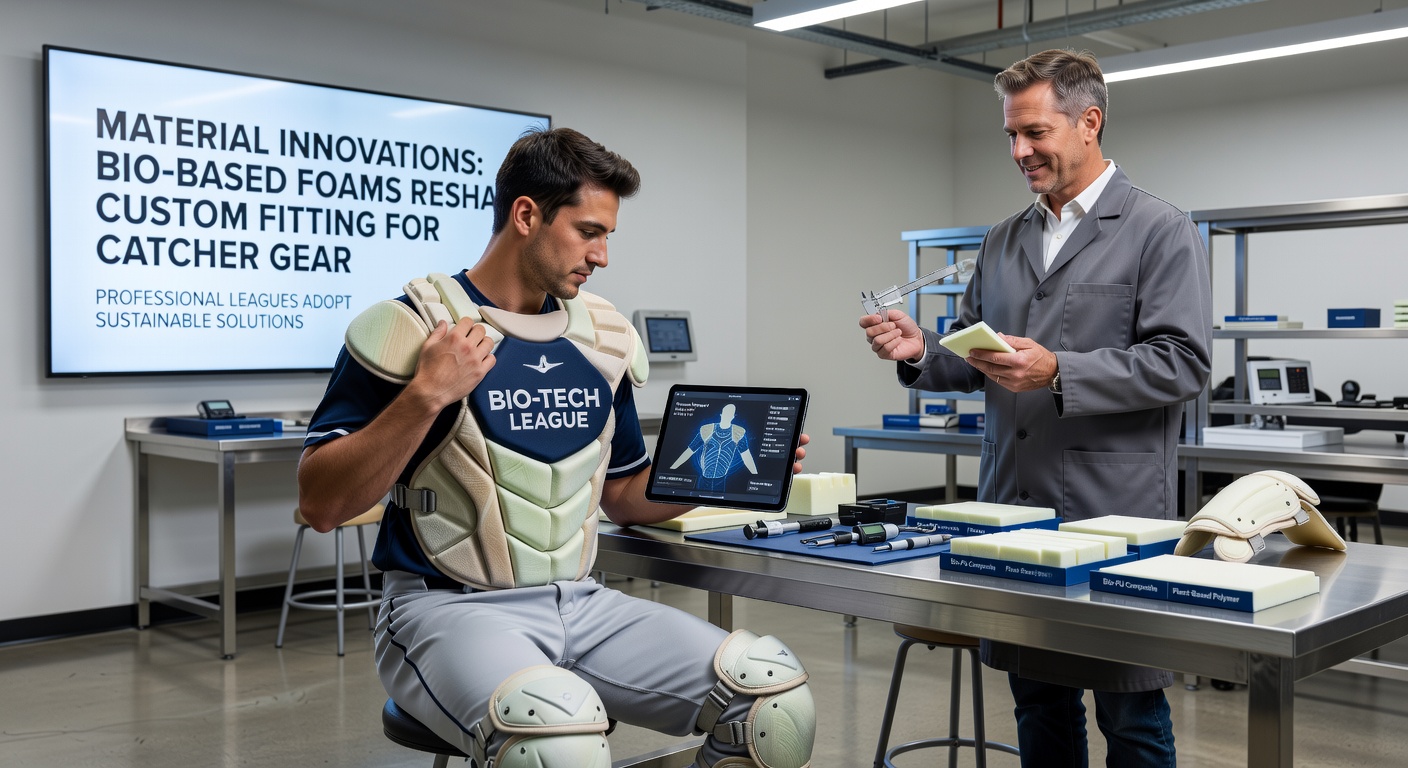
Material innovations in bio-based foams reshape custom fitting processes for baseball catcher gear across professional leagues
Bio-based foams derived from plant oils and agricultural byproducts have entered catcher equipment production lines where they replace petroleum-based polyurethanes in mitt padding, leg guard cores, and chest protector inserts. These materials exhibit comparable impact absorption while offering lower density that allows manufacturers to adjust thickness profiles during molding. Professional equipment suppliers began scaling these foams in 2024 after pilot tests confirmed consistent performance across temperature ranges encountered during extended game schedules.
Composition and performance characteristics
Castor oil and soybean derivatives form the primary feedstocks for the new foam matrices, which undergo chemical foaming processes that create open-cell structures with tunable firmness. Data from independent testing facilities show these foams maintain 92 percent of their original compression set resistance after 500 simulated impact cycles, a figure that aligns closely with legacy materials. Because the foams bond readily to 3D-scanned liner fabrics, production teams now integrate them directly into custom-fit workflows rather than relying on pre-cut blanks that require extensive hand trimming.
Changes to custom fitting workflows
Teams capture player hand and leg measurements using portable scanners that feed directly into CNC milling stations and injection molds. The bio-based foams accept precise contour cuts without crumbling at edges, which reduces scrap rates by approximately 18 percent according to equipment facility records. Fitters adjust foam density zones in a single pour cycle by varying catalyst ratios, a step that previously demanded multiple layered inserts glued together over several days. This consolidation shortens turnaround from measurement to delivery from ten days to four in several major-league clubhouses.
League-wide rollout timelines
By June 2026, thirteen of thirty major-league organizations had issued catcher-specific gear incorporating the new foams, with minor-league affiliates receiving parallel allocations for evaluation. Equipment managers report that the lighter overall weight of the assemblies decreases fatigue during doubleheaders, though quantitative injury data remain under collection by league medical staffs. European and Canadian research consortia have contributed parallel studies on foam biodegradation rates under composting conditions, providing supplementary documentation that supports league sustainability reporting requirements.
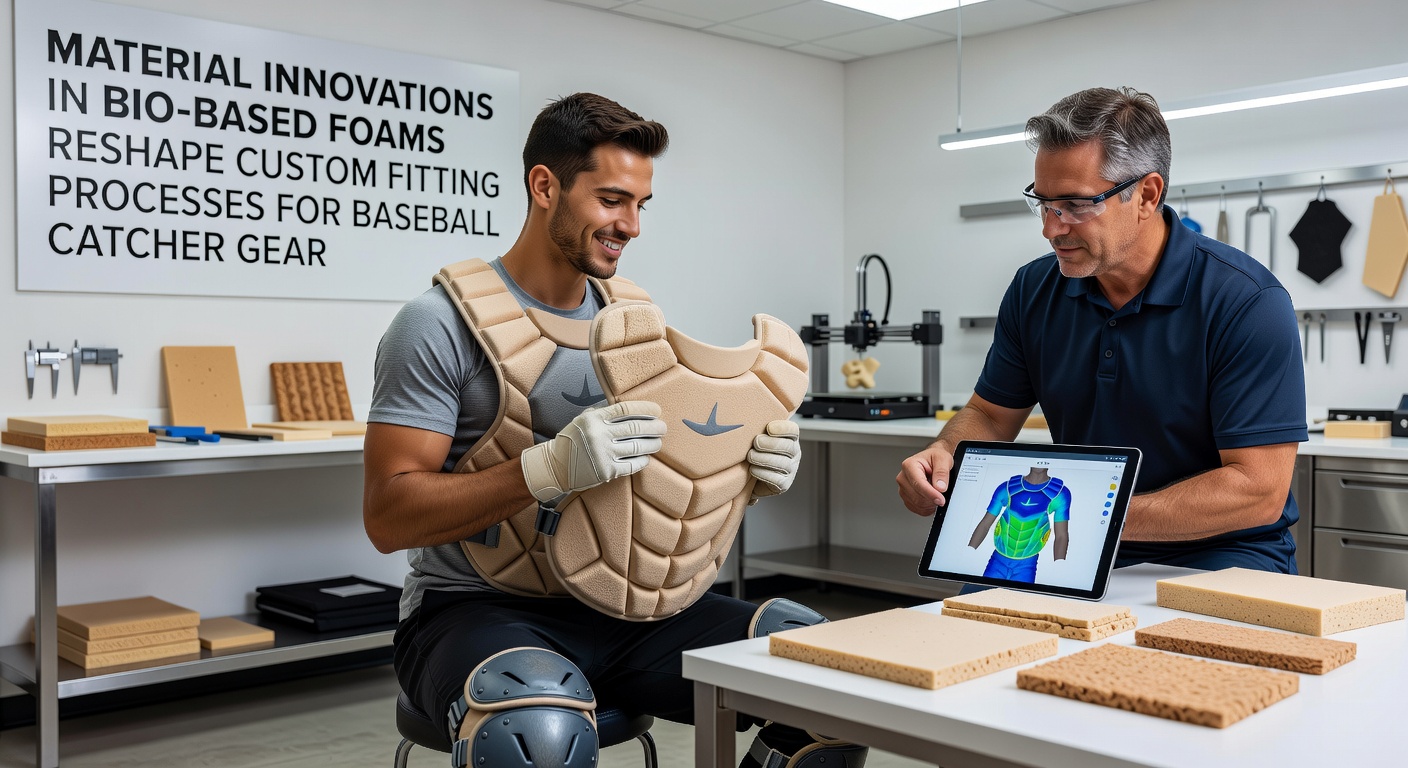
One documented case involved a catcher whose prior gear required three separate foam layers to achieve proper knee coverage. The updated process used a single bio-based block milled to match the player’s 3D scan, eliminating interface seams that previously shifted during slides. Similar adjustments have appeared across both American and National League squads as suppliers standardize the molding parameters.
Supply chain and sourcing developments
Raw material suppliers in the Midwest and Southeast United States have expanded crushing and refining capacity for castor and soy feedstocks to meet equipment demand. Trade data indicate a 27 percent increase in bio-polyol shipments to sporting goods converters between 2023 and 2025. Manufacturers maintain dual sourcing strategies that include traditional foams for backup inventory while scaling bio-based lines, a precaution against seasonal agricultural yield variations. Regulatory filings with agricultural departments track these volume shifts without imposing specific performance mandates on finished sports products.
Testing protocols and standardization
Independent laboratories apply ASTM and ISO impact standards to each production batch before release. Catchers in the sample groups complete on-field drills that record peak force transmission through instrumented chest protectors and shin guards. Results compiled through mid-2026 show no statistically significant deviation in force attenuation compared with prior-season equipment. League equipment committees review these datasets quarterly and have not issued additional certification steps beyond existing NOCSAE guidelines.
Conclusion
Bio-based foam adoption continues to streamline the sequence from digital measurement to finished catcher gear while preserving required protective thresholds. Professional leagues track material performance through ongoing data collection rather than abrupt policy shifts, allowing incremental integration across club operations. The same production adjustments that reduce fitting timelines also align with broader material availability trends reported by agricultural and manufacturing sectors.