Mapping the Evolution of Storage Solutions for Hunting Gear During Extended Expeditions
Written by Greta Peters · Jun 8, 2026
Mapping the Evolution of Storage Solutions for Hunting Gear During Extended Expeditions
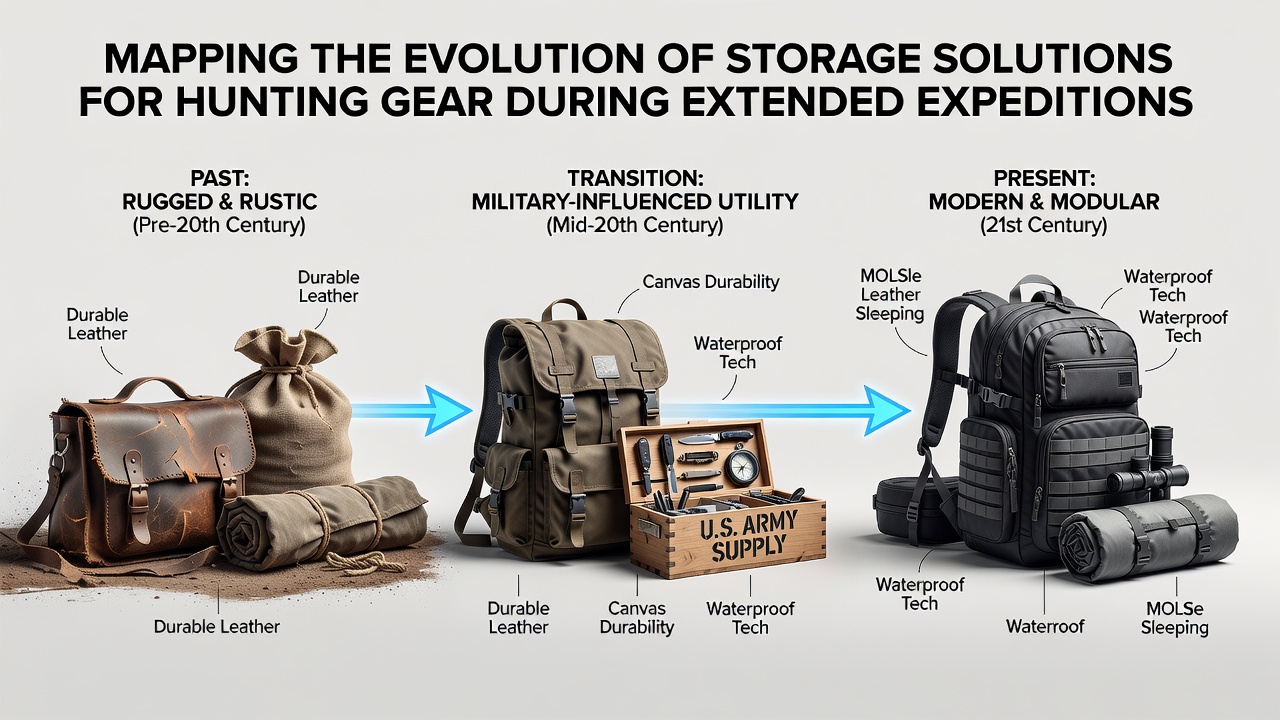
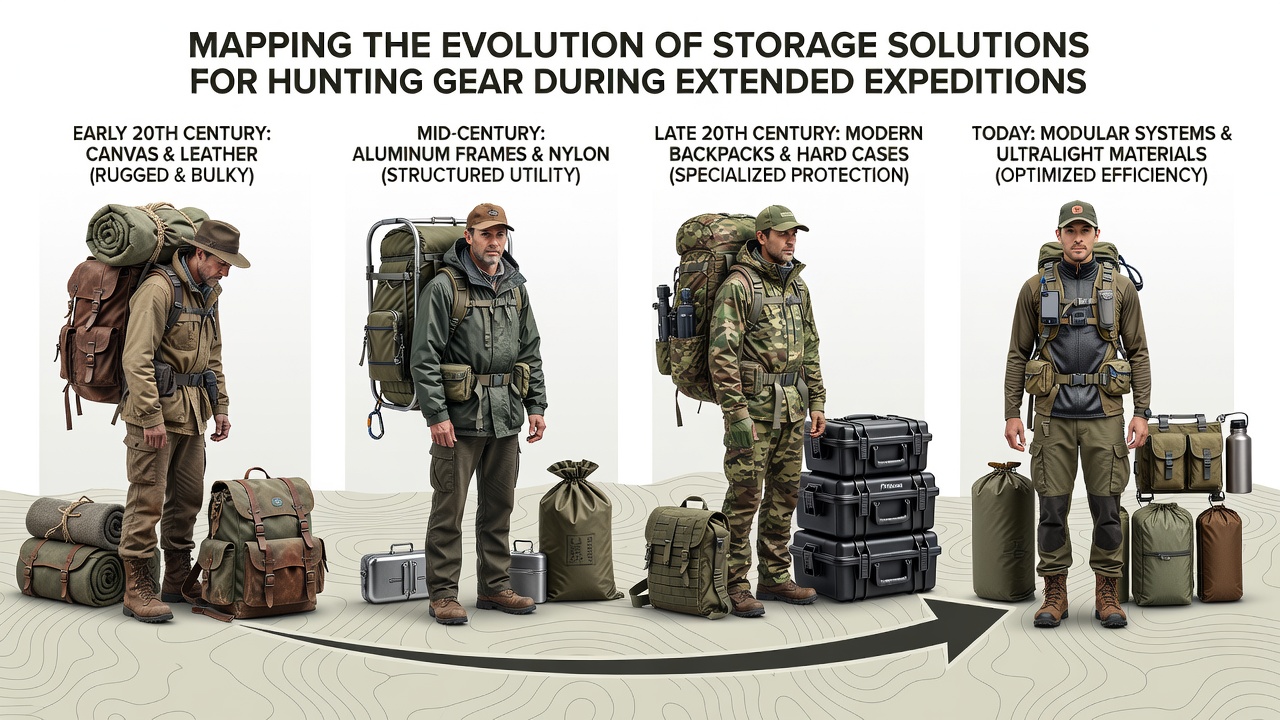
Storage solutions for hunting gear have developed through distinct phases as expeditions lengthened and terrain demands intensified, with early designs relying on basic leather pouches and canvas sacks that hunters carried on their backs or strapped to pack animals. These initial containers held essentials like ammunition, knives, and preserved food yet offered limited organization and weather resistance, which forced frequent adjustments during multi-day trips across forests and mountains. Researchers at institutions such as the University of British Columbia have traced how these rudimentary systems prioritized durability over capacity while expeditions in the 19th century often extended into weeks of remote travel.
By the early 20th century frame packs constructed from wood and metal entered widespread use and allowed hunters to distribute weight more evenly across the shoulders and hips. Military surplus items from both world wars introduced aluminum frames and external pockets that accommodated larger loads of rifles, optics, and camping supplies, and data from expedition logs archived by the National Park Service indicate that such frames reduced fatigue on trails exceeding 50 kilometers. Those who studied these transitions note that the shift coincided with increased regulation of public lands and a corresponding rise in planned backcountry hunts lasting seven to ten days.
Postwar Material Advances and Capacity Growth
Synthetic fabrics such as nylon and polyester replaced natural fibers after 1945 because they resisted abrasion and absorbed less moisture during prolonged exposure to rain and snow. Manufacturers added internal dividers and compression straps that kept gear stable on steep slopes, and reports compiled by Parks Canada show that pack volumes increased from roughly 40 liters in the 1950s to over 70 liters by the 1970s as hunters incorporated additional layers of clothing and specialized tools. External attachment points emerged during this period and enabled the carrying of bedrolls and game bags without compromising balance, although early versions lacked standardized mounting systems.
Modular attachment platforms gained traction in the 1980s when military-derived webbing patterns allowed users to configure pockets according to specific trip requirements. Hunters could relocate pouches for ammunition or first-aid kits without unpacking the entire load, and field studies conducted in Scandinavia during the same decade documented fewer lost items on expeditions that utilized these adaptable layouts. The ball's in the designer's court at this stage because compatibility between different manufacturers remained inconsistent until industry groups began publishing voluntary standards in the early 1990s.
Integration of Hydration, Electronics, and Tracking
Reservoir compartments for water bladders appeared in the late 1990s and eliminated the need for separate canteens that often froze or leaked in subzero temperatures common during northern expeditions. Simultaneously, padded sleeves designed for GPS units and two-way radios became standard features, and figures released by the Australian Department of Climate Change, Energy, the Environment and Water reveal that adoption rates for these integrated pockets reached 65 percent among commercial hunting outfitters by 2005. Those who've examined expedition records from this era observe that electronic devices required dedicated power sources, prompting the addition of cable routing channels and battery pockets that protected against moisture ingress.
Radio-frequency identification tags and lightweight GPS beacons started appearing inside storage compartments after 2010, enabling real-time location of critical items even when visibility dropped due to fog or dense vegetation. European research consortia funded through Horizon 2020 programs tested packs equipped with embedded sensors that logged weight distribution and temperature fluctuations, and the resulting datasets helped refine compartment shapes for better stability on uneven ground. In June 2026 several manufacturers introduced updated models featuring solar-charging panels stitched into the pack's exterior, allowing continuous operation of navigation tools during multi-week trips without reliance on disposable batteries.
Current Configurations and Sustainability Trends
Contemporary storage systems combine ultralight carbon-fiber frames with recycled polymer fabrics that meet updated environmental guidelines established by regulatory bodies in multiple countries. Internal organization now includes color-coded zones for ammunition, optics, and harvested game to streamline access while minimizing cross-contamination risks, and industry reports from the International Association for Falconry and Conservation of Birds of Prey indicate that such zoning reduces handling time by approximately 30 percent on average. Detachable daypacks that zip onto larger expedition frames provide flexibility when hunters split into smaller groups for scouting, and these hybrid designs have become common on routes documented in New Zealand Department of Conservation trail databases.
Waterproof liners and seam-taped construction protect sensitive electronics and dry food stores during river crossings or sudden storms, yet breathable panels prevent condensation buildup that previously degraded organic materials over extended periods. Observers note that weight savings from advanced composites allow inclusion of additional safety equipment such as satellite messengers without exceeding traditional load limits established for human endurance.
Conclusion
The progression from simple leather carriers to sensor-equipped modular packs reflects cumulative responses to longer expedition durations, harsher environments, and stricter resource-management requirements. Continued refinement of attachment standards and material recycling processes suggests further integration of tracking and power-management features in coming seasons, with data from ongoing field trials guiding those developments across varied geographic regions.