How Regional Weather Patterns Dictate Storage Choices for Multi-Use Fitness Accessories in Community Centers
Written by Otto Perry · Jul 30, 2026
How Regional Weather Patterns Dictate Storage Choices for Multi-Use Fitness Accessories in Community Centers
Regional weather patterns shape storage decisions for multi-use fitness accessories in community centers because temperature swings, humidity levels, and precipitation directly affect material longevity and equipment usability. Community facilities in different climate zones adopt distinct approaches to protect items like resistance bands, yoga mats, dumbbells, and stability balls from degradation, and observers note that these choices often balance cost, space constraints, and maintenance schedules.
Humidity and Moisture Management in Tropical and Subtropical Zones
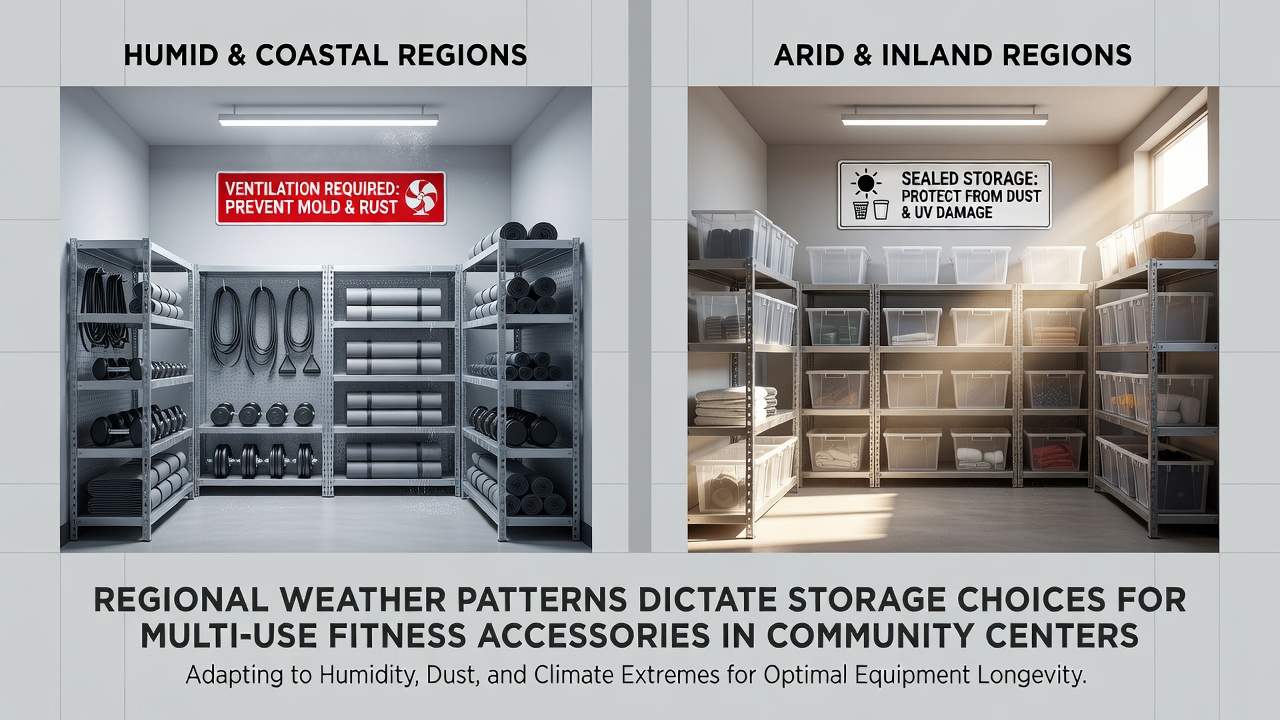
High humidity regions require storage systems that prioritize ventilation and moisture extraction since constant damp air promotes mold growth on porous materials and accelerates corrosion on metal components. Facilities in these areas install dehumidifiers within dedicated equipment rooms while using sealed yet breathable containers for fabric-based accessories, and data from regional weather monitoring shows that average relative humidity above 70 percent for extended periods increases the need for such interventions. Community centers often schedule weekly inspections during peak rainy seasons to catch early signs of mildew, which helps maintain equipment rotation across multiple user groups without rapid replacement cycles.
Temperature Extremes and Material Stability in Continental Climates
Continental climates with wide temperature fluctuations demand storage solutions that shield accessories from both heat expansion and cold contraction, as repeated cycles can warp plastic components and reduce elasticity in rubber items. Centers in these zones frequently opt for insulated storage cabinets equipped with temperature monitoring devices, and researchers have documented that daily swings exceeding 20 degrees Celsius correlate with higher failure rates in shared-use resistance equipment. Staff members rotate stock between main activity rooms and climate-buffered back storage to minimize exposure during the most intense summer or winter months.
Coastal and Arid Adaptations for Dust and Salt Exposure
Coastal locations introduce salt air corrosion risks while arid zones bring dust accumulation challenges, so storage choices there emphasize protective barriers and regular cleaning protocols. Facilities near oceans use corrosion-resistant shelving and sealed bins for metal weights and frames, whereas inland dry regions deploy air filtration units alongside covered racks to keep fine particles from embedding in foam rollers and mats. According to National Oceanic and Atmospheric Administration climate summaries, coastal humidity combined with salt aerosols accelerates oxidation, prompting many centers to adopt stainless steel or coated storage fixtures as standard. In arid settings, weekly vacuuming routines integrated into storage areas prevent abrasive buildup that shortens accessory lifespan during high-traffic periods.
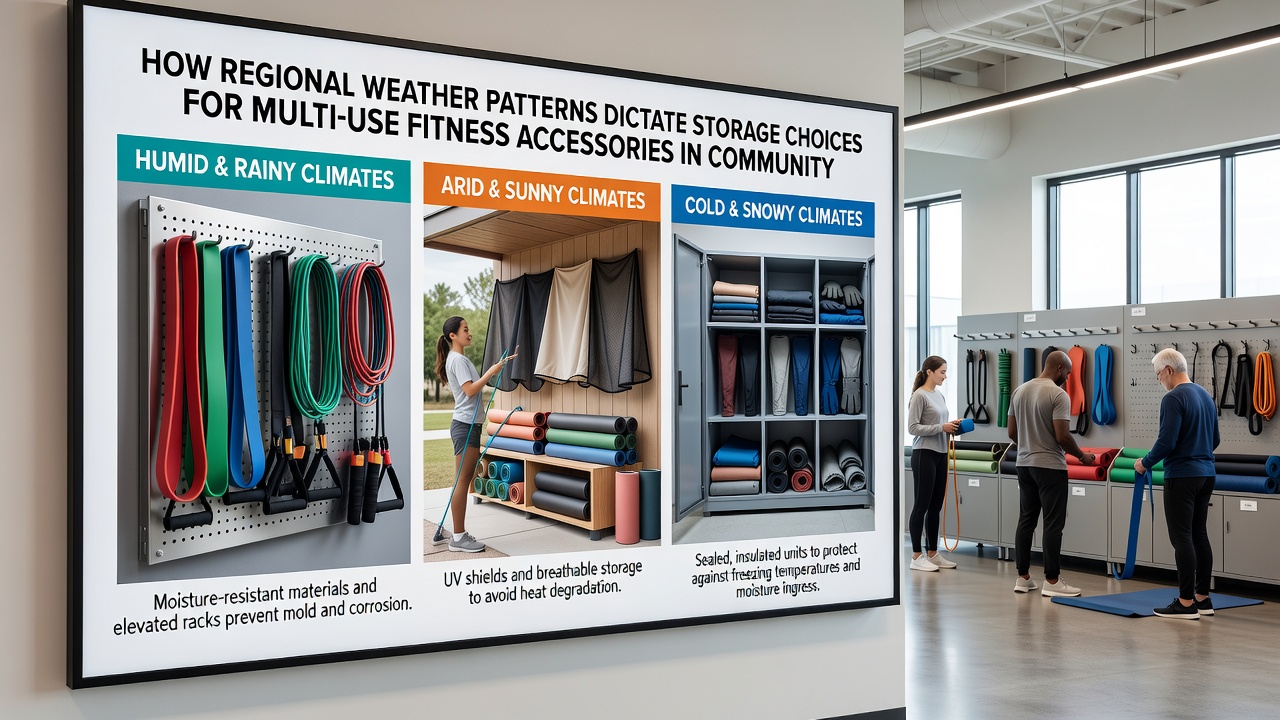
Multi-use accessories see particularly heavy rotation in community centers, which means storage systems must support quick retrieval while still providing environmental protection. Observers note that modular bin systems with adjustable dividers allow centers to separate items by material type, grouping moisture-sensitive fabrics away from temperature-stable metals. This organization reduces cross-contamination risks during seasonal transitions when weather patterns shift abruptly.
Projected Conditions and Planning for July 2026
Forecast models for July 2026 indicate intensified heat waves across several mid-latitude regions alongside prolonged humidity spikes in subtropical zones, prompting community centers to review storage infrastructure ahead of time. Facilities are expanding climate-controlled zones and testing phase-change material liners inside storage units to stabilize internal conditions during peak outdoor temperature events. Those who manage shared fitness resources report that proactive upgrades in advance of such periods reduce downtime and extend equipment service life across diverse user demographics.
Integration of Monitoring and Maintenance Practices
Effective storage strategies incorporate ongoing environmental monitoring rather than relying solely on initial setup, and studies from university research groups have linked consistent data logging of temperature and humidity to lower overall maintenance costs. Centers often pair digital sensors with manual checklists so staff can adjust ventilation or relocate items before weather-driven damage accumulates. This combined approach supports the multi-use nature of community center equipment, where accessories move between programs and require reliable condition upon each deployment.
Conclusion
Regional weather patterns continue to drive specialized storage decisions for fitness accessories in community centers, with solutions evolving alongside documented climate trends and usage demands. Facilities that align their storage infrastructure with local conditions maintain equipment functionality longer while accommodating the shared access model typical of these public spaces. Ongoing adjustments based on weather data help centers sustain program quality without unnecessary expenditures on replacements.