Exploring Tension Distribution Patterns Across Archery Bow Limbs and Their Influence on Accuracy for Long-Distance Field Archers
Written by Greta Peters · Jun 27, 2026
Exploring Tension Distribution Patterns Across Archery Bow Limbs and Their Influence on Accuracy for Long-Distance Field Archers
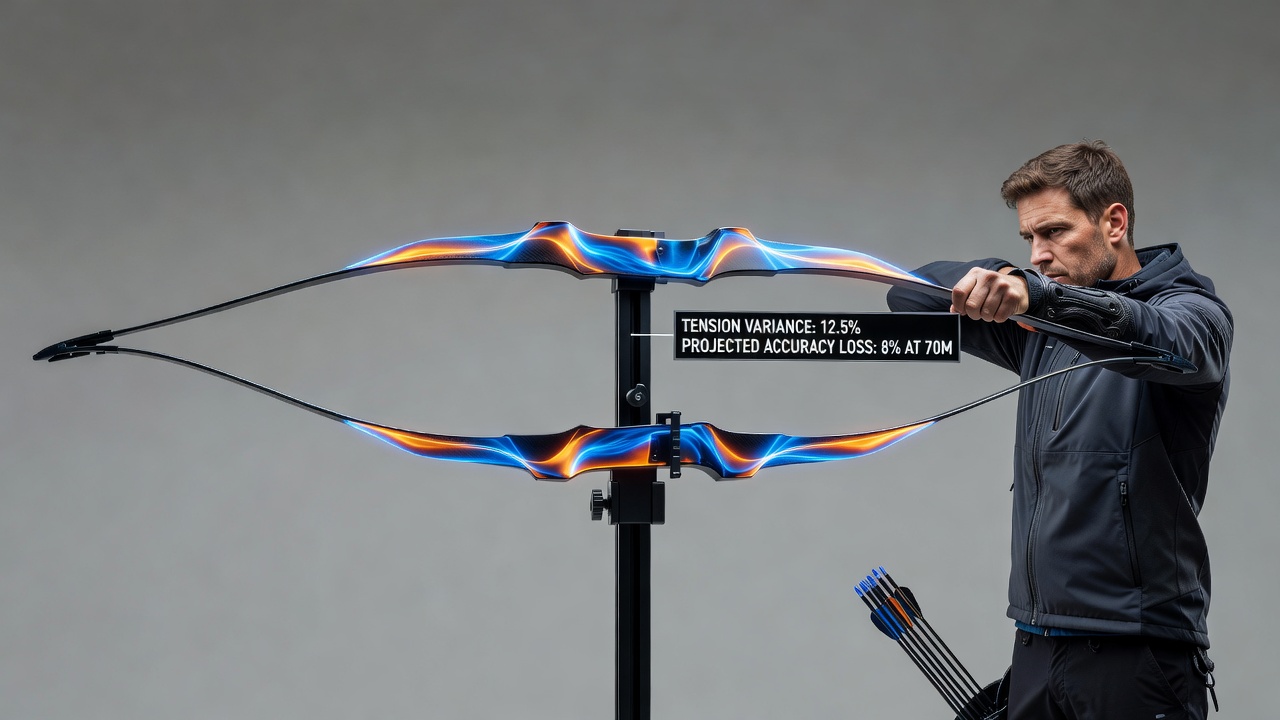
Archery equipment research continues to examine how tension spreads through bow limbs because these patterns directly affect energy transfer and shot consistency for field archers who target distances beyond 50 meters. Manufacturers design limbs from layered composites that create specific stress gradients along the length of each limb, and these gradients determine how evenly force returns to the arrow at release. Field archers rely on repeatable limb behavior because wind and elevation changes already introduce variables that compound any inconsistency in the bow itself.
Understanding Limb Construction and Tension Mapping
Modern recurve and compound limbs incorporate fiberglass or carbon layers arranged in distinct orientations so that tension concentrates near the riser while compression builds toward the tips, and this arrangement produces predictable flex patterns when archers reach full draw. Engineers use strain gauges and high-speed imaging to record these distributions during testing, which reveals that uniform tension along the working length of the limb reduces unwanted lateral movement at the point of release. Data from equipment studies show that limbs with balanced tension profiles maintain arrow speed within tighter tolerances across repeated shots, whereas uneven loading creates micro-variations that accumulate over longer distances.
Researchers at institutions focused on sports biomechanics have documented how limb thickness tapers influence stress lines, and they note that abrupt changes in cross-section create localized high-tension zones that dissipate energy through vibration rather than forward propulsion. Field archers who compete in outdoor events encounter these effects most clearly when shooting uphill or across gusty terrain because any residual limb oscillation alters the arrow's initial flight path before external factors take over.
Effects on Arrow Flight and Accuracy at Extended Ranges
Tension distribution patterns translate into measurable differences in arrow grouping because limbs that release stored energy symmetrically produce less paradox and therefore less need for compensatory tuning adjustments. Long-distance shots amplify small deviations since the arrow spends more time in flight, allowing even minor torque from asymmetric limb recovery to shift impact points by several centimeters at 70 meters. Equipment tests conducted under controlled conditions demonstrate that bows with optimized tension mapping maintain tighter vertical spreads when archers execute identical draw lengths and anchor points.
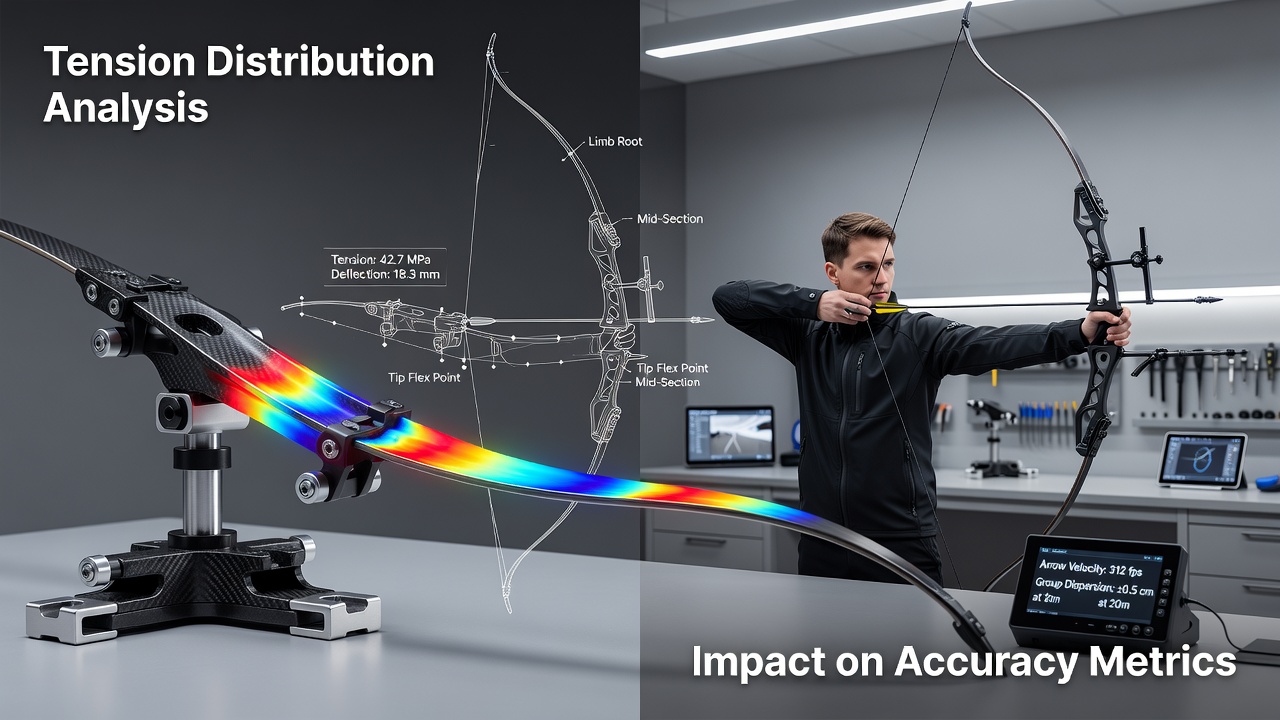
Coaches working with elite field teams track these variables through consistent monitoring of limb deflection curves, which helps them identify when manufacturing tolerances or material fatigue begin to alter performance. One study published in sports engineering journals found that limbs exhibiting a 5 percent asymmetry in tension along opposing sides produced statistically significant widening of groups at distances exceeding 60 meters, while symmetrical designs kept dispersion within acceptable competition limits. Archers adjust brace height and tiller settings to compensate for inherent limb characteristics, yet these corrections remain most effective when the underlying tension map stays stable throughout a tournament round.
Testing Methods and Equipment Developments
Manufacturers now integrate digital sensors into prototype limbs to capture real-time tension data across multiple draw weights, and this approach allows precise mapping before production models reach archers. Field events scheduled through 2026 continue to highlight equipment that meets updated consistency standards set by international governing bodies, including World Archery regulations on limb specifications. Observers note that continued refinement of carbon layup techniques reduces hot spots where tension concentrates, which in turn lowers the amplitude of post-release vibration that can disturb arrow clearance.
Additional work from research groups in Canada and Australia has examined how temperature fluctuations during outdoor competitions interact with limb materials, because thermal expansion can shift tension distribution slightly and affect accuracy when archers move between shaded and sun-exposed shooting positions. These findings encourage archers to select limbs tested across temperature ranges typical of field courses rather than indoor ranges alone.
Practical Implications for Field Competitors
Competitors who log extensive practice at varying distances report that bows with well-characterized tension patterns require fewer sight adjustments when wind conditions change, since the equipment itself introduces less variability. Maintenance routines now include periodic checks for delamination or set that would alter original tension maps, and many archers document these measurements alongside their tuning notes. Equipment suppliers provide deflection charts with new limbs so that archers can compare actual performance against expected patterns before major events.
Conclusion
Continued analysis of tension distribution across bow limbs supplies field archers with concrete data for equipment selection and tuning decisions that influence long-range consistency. As measurement techniques advance, manufacturers refine designs that deliver more uniform energy return, which supports the precision demands of outdoor competitions where distance and environmental factors already challenge accuracy. Archers who understand these mechanical relationships gain practical advantages when selecting and maintaining equipment for extended field courses.