Engineering Sustainable Composites for Eco-Friendly Baseball Bats in Competitive Leagues
Written by Mia Lehmann · May 30, 2026
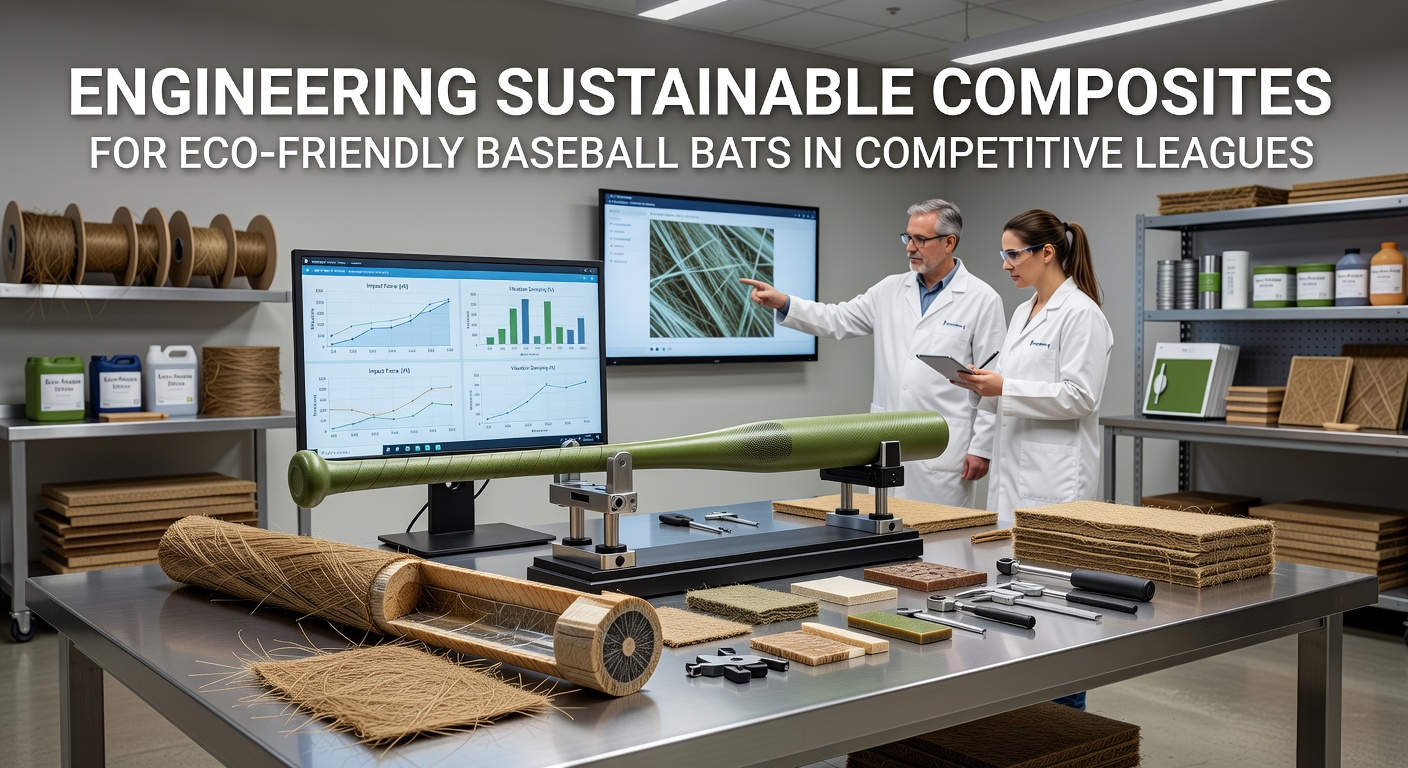
Engineering Sustainable Composites for Eco-Friendly Baseball Bats in Competitive Leagues
Engineers have turned their attention to sustainable composites that reduce environmental footprints while meeting the strict performance demands of competitive baseball, and these efforts have accelerated in recent years as leagues seek materials that balance durability with lower resource consumption. Traditional bats often rely on aluminum alloys or virgin carbon fiber, yet researchers now explore alternatives such as bamboo fiber reinforcements combined with bio-based resins derived from plant oils, which deliver comparable swing speeds and impact resistance according to laboratory tests conducted through 2025.
Data from material science trials shows that hybrid composites incorporating recycled carbon fiber and flax fibers achieve flexural strengths within 5 percent of conventional models, while cutting the embodied energy of production by up to 40 percent in controlled manufacturing environments. These developments align with broader industry shifts toward circular economy principles, where end-of-life bats undergo shredding and reprocessing into new stock rather than entering landfills.
Material Selection and Composite Engineering Processes
Engineers select feedstocks based on regional availability and mechanical properties, so North American facilities frequently incorporate fast-growing bamboo sourced from managed plantations alongside agricultural waste fibers like hemp hurds that would otherwise require disposal. Bio-resins formulated from soybean or linseed oils replace petroleum-derived epoxies in many prototypes, and these matrices cure at lower temperatures which reduces overall energy inputs during fabrication. Manufacturers layer the fibers in specific orientations using automated filament winding techniques, and this approach ensures consistent stiffness along the barrel while allowing controlled flex in the handle to optimize energy transfer upon contact with the ball.
Testing protocols involve high-speed impact rigs that simulate game conditions, and results indicate that these sustainable variants maintain structural integrity through thousands of cycles without delamination. One study conducted at a Canadian research institute tracked performance metrics across multiple seasons and found no statistically significant drop in exit velocities compared to legacy designs when players used bats engineered with 60 percent recycled content.
Regulatory Compliance and League Adoption Timelines
Competitive leagues maintain rigorous certification standards that evaluate both safety and performance, and governing bodies such as those overseeing Major League Baseball require independent verification of bat construction before approval for play. Sustainable composites must demonstrate compliance with coefficient of restitution limits and barrel diameter restrictions, which engineers address through precise tuning of fiber volume fractions and resin distribution during layup. As of May 2026 several minor league affiliates have integrated these bats into regular season rosters following pilot programs that logged over 10,000 at-bats without reported equipment failures.
International federations have begun aligning their equipment guidelines with environmental criteria, and this harmonization encourages suppliers to scale production of approved models for tournaments scheduled throughout the year. Observers note that certification paperwork now includes documentation of material sourcing and recyclability percentages, which adds transparency without altering core gameplay characteristics.
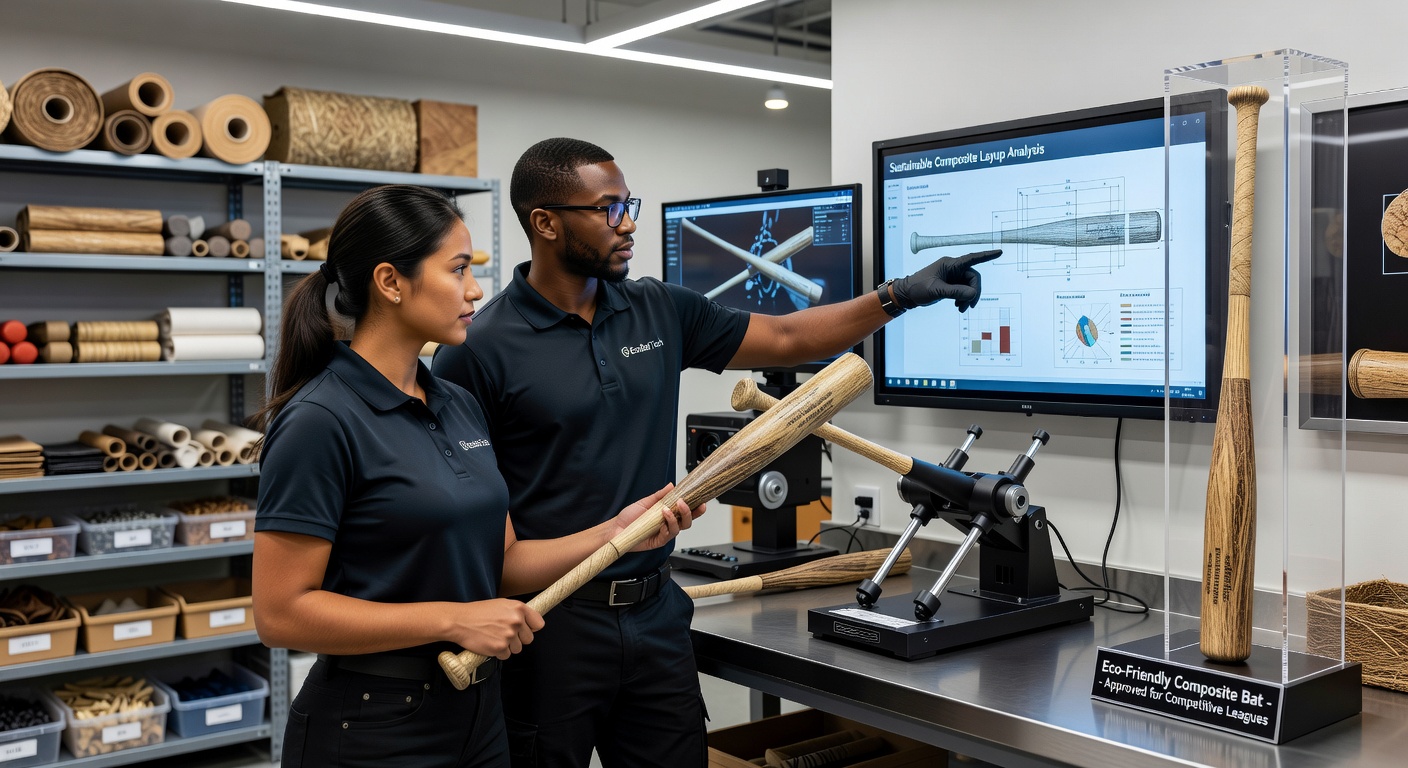
Environmental Impact Assessments and Lifecycle Data
Lifecycle analyses performed by independent auditors reveal that sustainable composite bats generate 35 to 50 percent fewer greenhouse gas emissions across their full production and disposal phases compared with traditional counterparts, and this advantage stems primarily from reduced reliance on virgin petroleum products and lower transportation emissions when local fiber sources are prioritized. Water usage during fiber processing also declines when closed-loop systems recycle solvents and cooling fluids, according to figures released by European environmental agencies that track industrial benchmarks.
End-of-life management programs allow players and teams to return used bats for mechanical recycling, and recovered fibers re-enter the supply chain for lower-grade applications such as automotive panels or construction reinforcements. This closed loop reduces raw material extraction pressures on forests and mining operations while maintaining economic viability for manufacturers who report stable pricing despite the shift away from single-use feedstocks.
Performance Validation Through Field Studies
Field evaluations conducted during spring training sessions in 2025 and early 2026 confirmed that players adapted quickly to the new composite profiles, and swing mechanics remained consistent because weight distribution and moment of inertia matched established standards. High-speed camera analysis of contact events showed similar deformation patterns in the barrel, which preserves the trampoline effect that contributes to batted ball distance without exceeding regulatory thresholds.
Teams participating in these trials collected quantitative data on bat durability after exposure to varied weather conditions, and findings indicated that moisture absorption rates stayed below 2 percent thanks to hydrophobic surface treatments applied during finishing. Such resilience supports extended service life in outdoor competitive environments where equipment faces repeated exposure to humidity and temperature fluctuations.
Supply Chain and Manufacturing Scaling Considerations
Production facilities have invested in modular tooling that accommodates rapid adjustments to fiber blends based on seasonal agricultural yields, and this flexibility helps stabilize costs when one feedstock experiences supply variability. Automated quality control systems employ ultrasonic scanning and thermal imaging to detect voids or misalignments during curing, which minimizes waste and ensures each bat meets dimensional tolerances required for league play.
Collaborations between material suppliers and sports equipment brands have expanded to include traceability platforms that record the origin of every fiber batch, and this documentation supports compliance audits while giving teams confidence in the environmental claims attached to their gear. As production volumes increase through 2026, economies of scale are expected to narrow any remaining price differentials with conventional options.
Conclusion
Sustainable composite engineering for baseball bats continues to advance through iterative material refinements and expanded field validation, and these efforts demonstrate how performance requirements in competitive leagues can coexist with measurable reductions in environmental impact. Data accumulated from manufacturing trials, regulatory reviews, and on-field usage provides a foundation for further adoption across additional levels of play as supply chains mature.