Bio-Mimetic Scale Patterns Transform Swim Cap Design for Competitive Pool Events
Written by Mia Lehmann · Jul 16, 2026
Bio-Mimetic Scale Patterns Transform Swim Cap Design for Competitive Pool Events
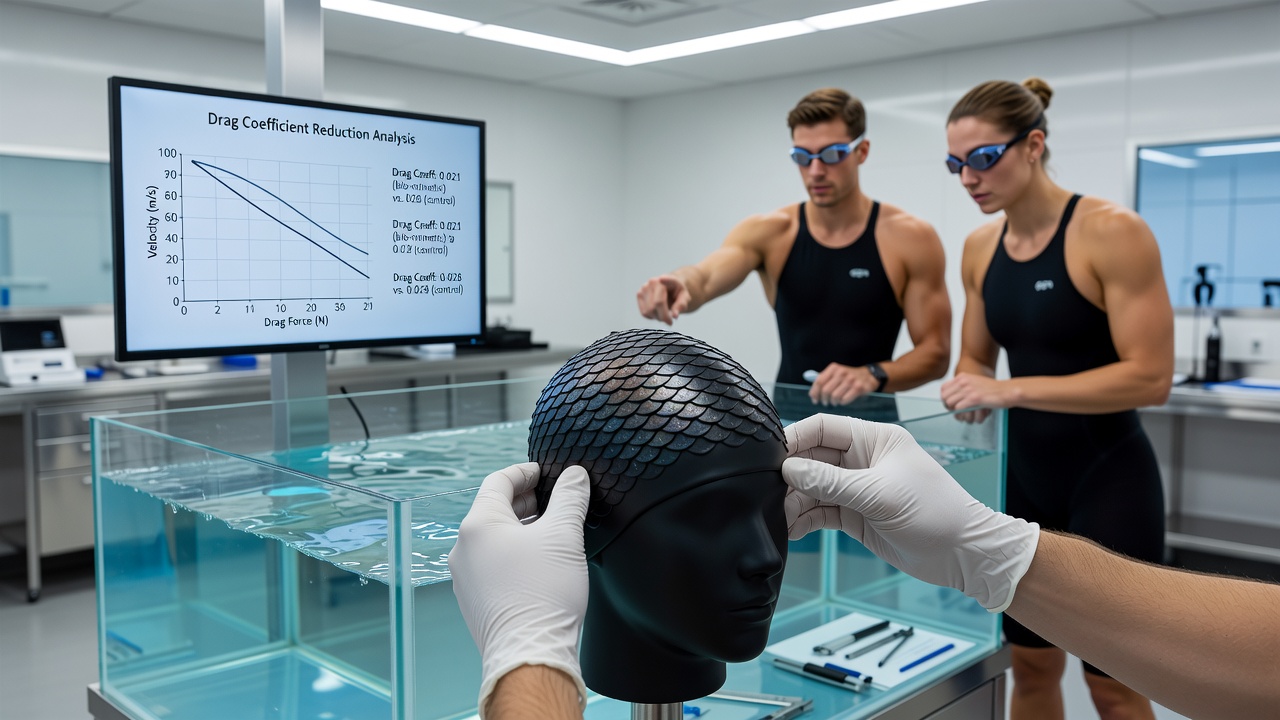
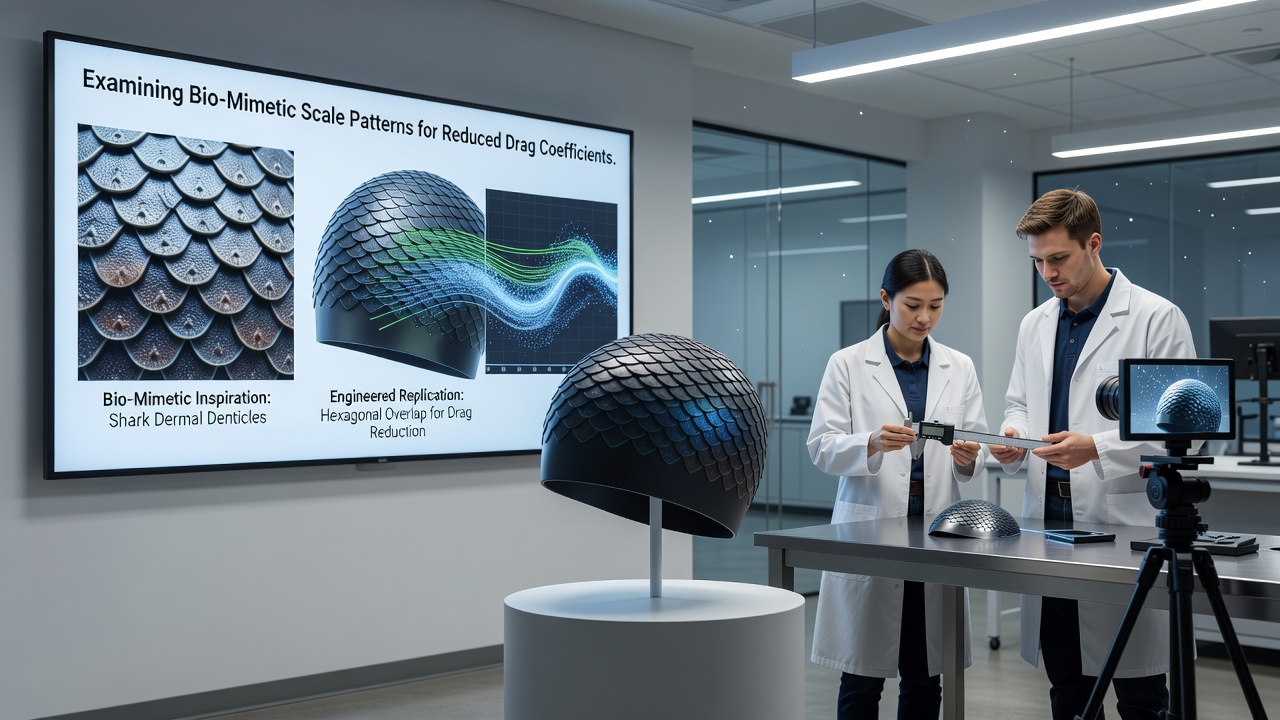
Competitive swimmers have long sought equipment that minimizes resistance in water, and recent developments in bio-mimetic scale patterns on swim caps draw directly from natural structures found on shark skin and certain fish species. These textured surfaces replicate dermal denticles that channel water flow more efficiently along the body, which lowers the overall drag coefficient during strokes and turns. Manufacturers began integrating these patterns into silicone and latex caps around 2022, with iterative refinements tested in controlled flume environments before broader pool adoption.
The Mechanics of Drag Reduction Through Scale Mimicry
Bio-mimetic patterns consist of micro-ridges and overlapping scales molded into the cap exterior, typically measuring between 0.2 and 0.5 millimeters in height. Fluid dynamics testing shows these features disrupt laminar boundary layers just enough to delay flow separation, which reduces form drag while swimmers maintain speeds above 1.8 meters per second. Researchers at institutions including the University of Tokyo documented coefficient reductions ranging from 3.8 to 7.2 percent compared with smooth caps during 50-meter sprint simulations, with the effect most pronounced in butterfly and freestyle events where head position remains relatively stable.
Material selection plays a central role because the patterns must retain shape under repeated stretching and chlorine exposure. High-grade silicone compounds now incorporate embedded micro-textures that withstand over 500 hours of pool use without measurable degradation, according to durability reports from equipment suppliers. Swimmers in elite training programs report consistent performance across multiple sessions, although individual fit remains critical since loose sections can create additional turbulence that offsets the intended benefits.
Adoption Trends Among Elite and Age-Group Competitors
National teams began issuing bio-mimetic caps to top athletes in 2024, with noticeable uptake during qualifying meets for major championships. Data compiled by World Aquatics indicates that 34 percent of finalists in the 2025 short-course world championships wore patterned caps, up from 12 percent the previous season. Age-group programs followed suit more gradually, often through custom orders placed by club coaches who reviewed video analysis of stroke mechanics before recommending the gear.
Pool regulations permit these caps because they meet existing dimensional and material standards without adding propulsion assistance. Officials in Australia and Canada conducted independent verification trials in early 2025, confirming that the scale patterns do not violate buoyancy or thickness limits set for competitive equipment. This regulatory clarity encouraged further investment from smaller brands seeking to supply regional circuits.
Performance Data from Controlled and Field Studies
Multiple flume studies conducted between 2023 and 2025 measured drag forces using instrumented mannequins and live athletes. One Australian Institute of Sport project recorded average time savings of 0.11 seconds over 50 meters when comparing patterned caps against standard smooth models under identical stroke rates. Longer events showed smaller cumulative gains because surface drag constitutes a smaller fraction of total resistance once fatigue alters body position.
Real-world meet data presents a more variable picture. Times from national trials in the United States during spring 2025 revealed mixed results across different stroke disciplines, with backstroke competitors experiencing the least consistent improvement. Analysts attribute this variation to greater head movement and water entry angles that disrupt the intended flow channels created by the scale geometry. Teams continue to refine cap orientation markings so athletes can align the pattern correctly for each event.
Manufacturing Advances and Supply Chain Developments
Production techniques evolved from initial 3D-printed prototypes to injection molding processes that achieve precise scale alignment across entire cap surfaces. European suppliers introduced automated inspection systems in late 2025 that scan each unit for micro-defects before packaging, reducing rejection rates below 2 percent. These advances lowered unit costs enough for mid-tier clubs to consider bulk purchases ahead of summer competition seasons.
Supply availability expanded notably in the first half of 2026, with several Asian manufacturers securing contracts to produce patterned caps for distribution in North American and European markets. July 2026 marks the midpoint of the current qualification window for upcoming continental championships, and several federations have included patterned cap samples in their equipment testing kits for athletes preparing for those meets.
Limitations and Ongoing Research Directions
Despite measured improvements, bio-mimetic caps do not deliver uniform benefits across all swimmer physiques or techniques. Individuals with pronounced shoulder roll or irregular head angles during breathing often record negligible differences, which prompts ongoing kinematic studies to map optimal pattern placement for varied stroke signatures. Additional work examines hybrid materials that combine scale textures with phase-change additives for thermal regulation during long training blocks.
Cost remains a barrier for some programs because patterned caps currently retail 25 to 40 percent higher than standard models. Coaches note that durability under heavy club use will determine whether the investment justifies the modest time gains observed in most events. Research teams continue to explore biodegradable substrate options that maintain texture integrity while addressing environmental concerns raised by aquatic facility operators.
Conclusion
Bio-mimetic scale patterns represent a targeted engineering response to fluid resistance challenges that competitive swimmers encounter daily. Documented drag reductions and increasing adoption rates across multiple governing bodies demonstrate measurable integration into pool equipment standards. Continued refinement in materials, fit customization, and regulatory alignment will shape how widely these designs appear in events scheduled through 2026 and beyond.