Antimicrobial Yarn Integrations Extend Freshness in Endurance Athletes' Multi-Use Gym Apparel
Written by Wendy Neumann · Jun 25, 2026
Antimicrobial Yarn Integrations Extend Freshness in Endurance Athletes' Multi-Use Gym Apparel
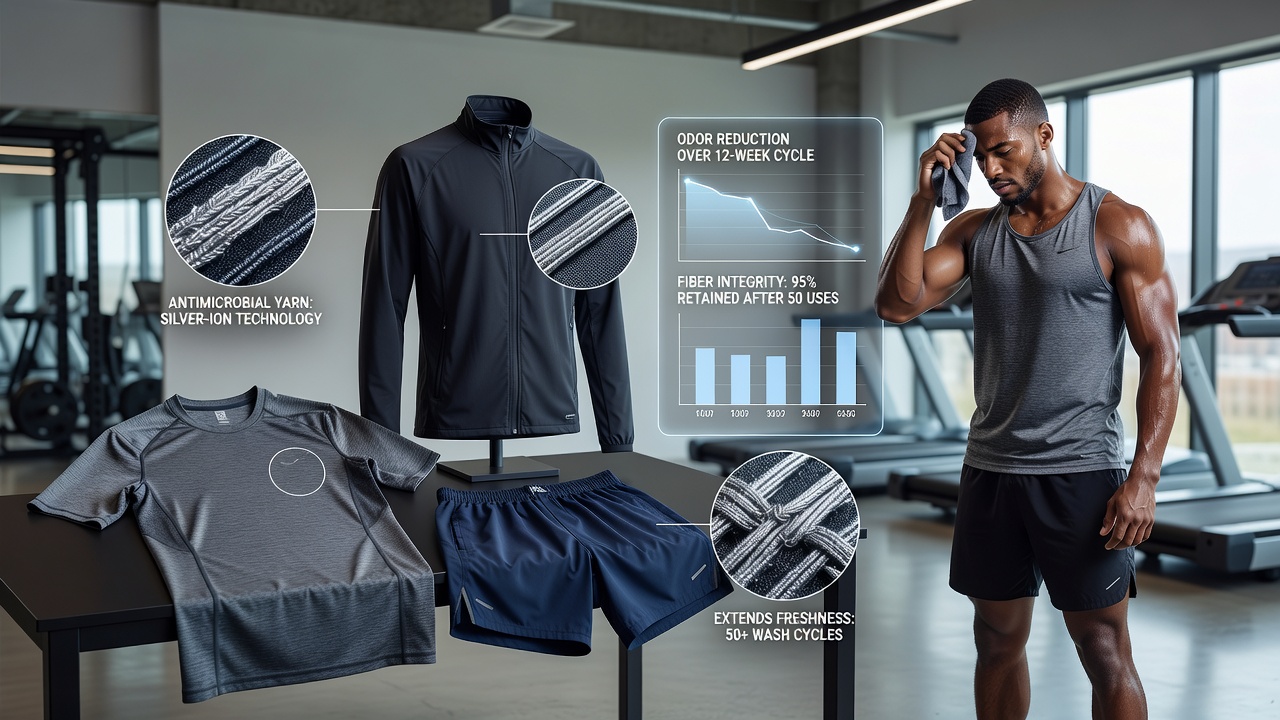
Antimicrobial yarn integrations have entered multi-use gym apparel designs aimed at endurance athletes who cycle through repeated training sessions without frequent laundering. These yarns incorporate agents such as silver ions or zinc compounds that inhibit bacterial growth on fabric surfaces, and manufacturers embed them directly into synthetic fibers like polyester blends during the spinning process. Data from textile engineering reports shows that such integrations maintain efficacy across dozens of wash cycles when properly formulated.
Mechanisms Behind Odor Control in Training Gear
Endurance athletes generate substantial sweat volumes during extended sessions, and bacteria metabolize those compounds to produce odors. Antimicrobial yarns disrupt this process by releasing controlled ions that target microbial cell walls, which prevents colonization on inner layers of shirts, tights, and base layers. Studies conducted at institutions in Canada indicate that treated fabrics reduce bacterial counts by measurable percentages compared to untreated controls after simulated training cycles.
Integration occurs through several established methods, including masterbatch addition during extrusion and topical finishing post-weaving. The former approach distributes the active agents evenly throughout the yarn structure, while the latter applies coatings that bond to fiber surfaces. Both techniques allow apparel to withstand the mechanical stresses of repeated use in gym environments where athletes rotate through multiple sessions per week.
Performance Across Repeated Training Cycles
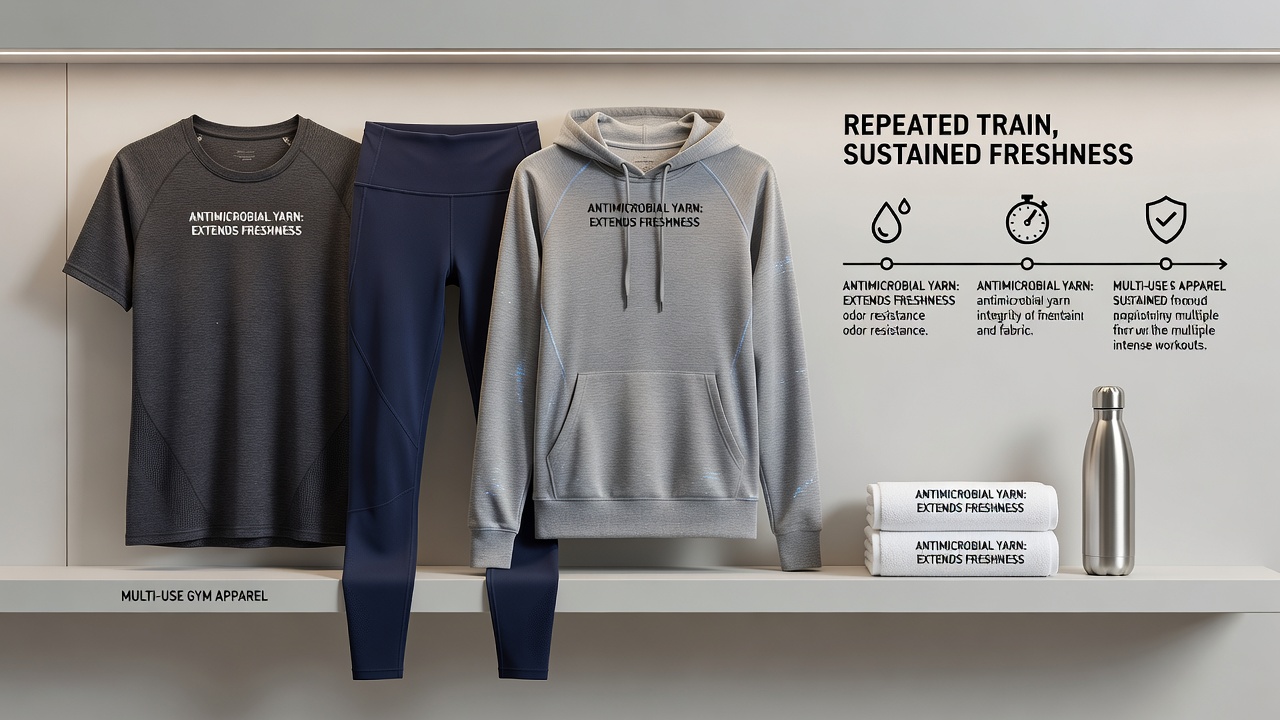
Multi-use apparel for endurance sports must retain functional properties after exposure to sweat, friction, adn machine washing. Antimicrobial treatments address freshness retention by limiting odor buildup that accumulates when garments sit between sessions. Field observations from training facilities reveal that athletes wearing treated items report sustained comfort levels during consecutive days of high-volume workouts, and fabric analysis confirms lower volatile organic compound emissions from treated versus standard materials.
Researchers have tracked performance metrics in controlled environments where garments undergo 30 to 50 wash cycles followed by bacterial inoculation tests. Results published through Australian textile research networks demonstrate that properly integrated yarns maintain over 90 percent inhibition rates in many formulations, although efficacy varies with the specific antimicrobial agent and yarn construction. This data supports use cases where athletes pack limited gear for training camps or travel periods.
Material Compatibility and Design Considerations
Designers combine antimicrobial yarns with moisture-wicking polyester and elastane to create base layers that manage both odor and perspiration simultaneously. The yarns must not compromise stretch recovery or breathability, so engineers test hybrid constructions that place treated fibers in high-contact zones such as underarms and torso panels. European standards organizations have outlined testing protocols that evaluate these combined properties under conditions mimicking endurance training demands.
Durability testing includes abrasion resistance alongside antimicrobial efficacy because gym apparel experiences repeated friction against equipment and skin. Yarns treated with embedded agents show greater longevity than surface-applied finishes, and manufacturers adjust blend ratios to balance cost with performance across product lines aimed at competitive athletes.
Current Developments as of June 2026
Industry updates scheduled for release around June 2026 include refined formulations that incorporate bio-based antimicrobial compounds derived from natural extracts. These newer agents aim to address regulatory preferences in multiple regions while preserving the extended freshness characteristics already established in synthetic systems. Preliminary data shared at textile conferences suggests comparable inhibition performance with improved environmental profiles during manufacturing.
Apparel brands have begun incorporating traceability features that allow athletes to verify treatment levels through embedded markers, and supply chain documentation tracks the antimicrobial components from yarn production through finished garments. This approach aligns with broader efforts to standardize performance claims across global markets.
Conclusion
Antimicrobial yarn integrations represent a targeted response to the specific demands of endurance athletes who rely on multi-use gym apparel across extended training periods. The technology focuses on bacterial control within fabric structures, and available evidence from diverse research sources confirms measurable reductions in odor development under repeated use conditions. Continued refinement of integration methods and agent types supports ongoing adaptation to athlete requirements and regulatory frameworks worldwide.