Aerodynamic Contouring Shapes Soccer Ball Panels for Stable Flight in Windy Conditions
Written by Mia Lehmann · Jun 6, 2026
Aerodynamic Contouring Shapes Soccer Ball Panels for Stable Flight in Windy Conditions
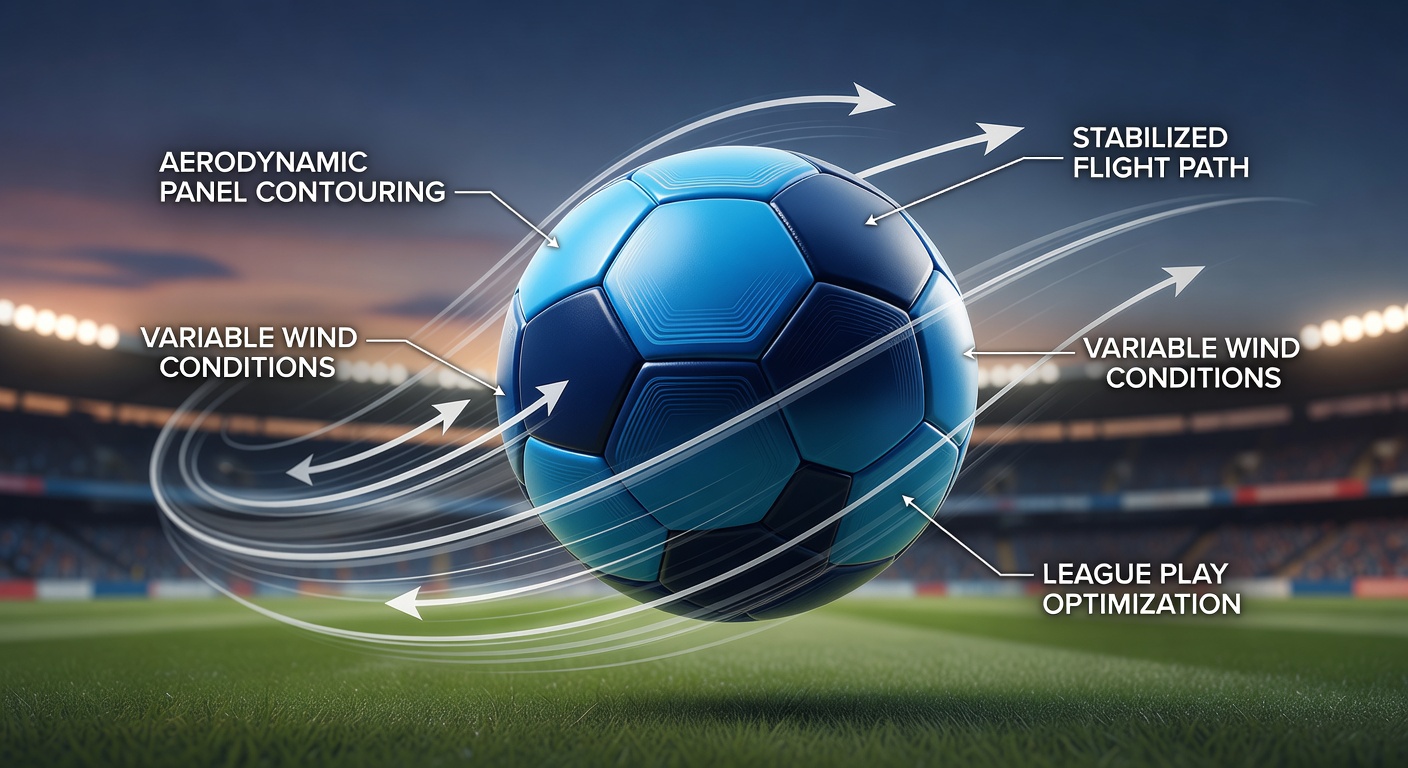
Panel geometry in modern soccer balls directs airflow around the sphere and reduces erratic movement when gusts hit during matches. Manufacturers shape the seams and surfaces with specific curves and depths that channel air into predictable patterns instead of allowing turbulence to build unevenly across the ball's exterior. Data from wind tunnel experiments shows these contours cut lateral deviation by measurable margins when crosswinds reach speeds common on open pitches in league schedules.
Panel Evolution and Design Shifts
Traditional 32-panel constructions gave way to fewer larger panels in the early 2000s because fewer seams created more consistent contact surfaces for the foot while the remaining seams received deeper contouring to manage separation points in the boundary layer. Teams in major competitions adopted balls with 14 or even six panels where each panel edge incorporates raised or recessed profiles calibrated through computational fluid dynamics. Observers note that these changes appeared first in international tournaments and then spread into domestic leagues as suppliers standardized the approach for consistency across different playing environments.
Designers calculate the radius of curvature along each seam so that air flowing over the ball encounters gradual pressure changes rather than abrupt shifts that amplify Magnus forces in side winds. Research from institutions such as the University of Tokyo demonstrates how micro-textures placed near the seams further delay flow separation on the leeward side and keep the wake narrower during variable conditions.
How Contouring Stabilizes Trajectory
Air meets the contoured panels at different angles depending on spin rate and wind vector yet the engineered edges force the flow to reattach in controlled zones. This reduces the random tumbling that older smooth panels allowed when gusts arrived from changing directions. Engineers measure the resulting drag coefficient across a range of Reynolds numbers that correspond to typical match speeds and find lower variation when panels carry the optimized contour depth. League officials require balls to pass these stability thresholds before approval because unpredictable flight directly affects scoring opportunities and defensive positioning.
During a typical outdoor fixture the ball might encounter headwinds shifting to crosswinds within seconds and the contoured surfaces respond by maintaining a tighter flight corridor. Studies published through the Journal of Sports Engineering and Technology confirm that balls with advanced panel contouring exhibit up to 30 percent less lateral displacement in simulated 10 meter per second gusts compared with earlier generations lacking those features.
Validation Through Testing Protocols
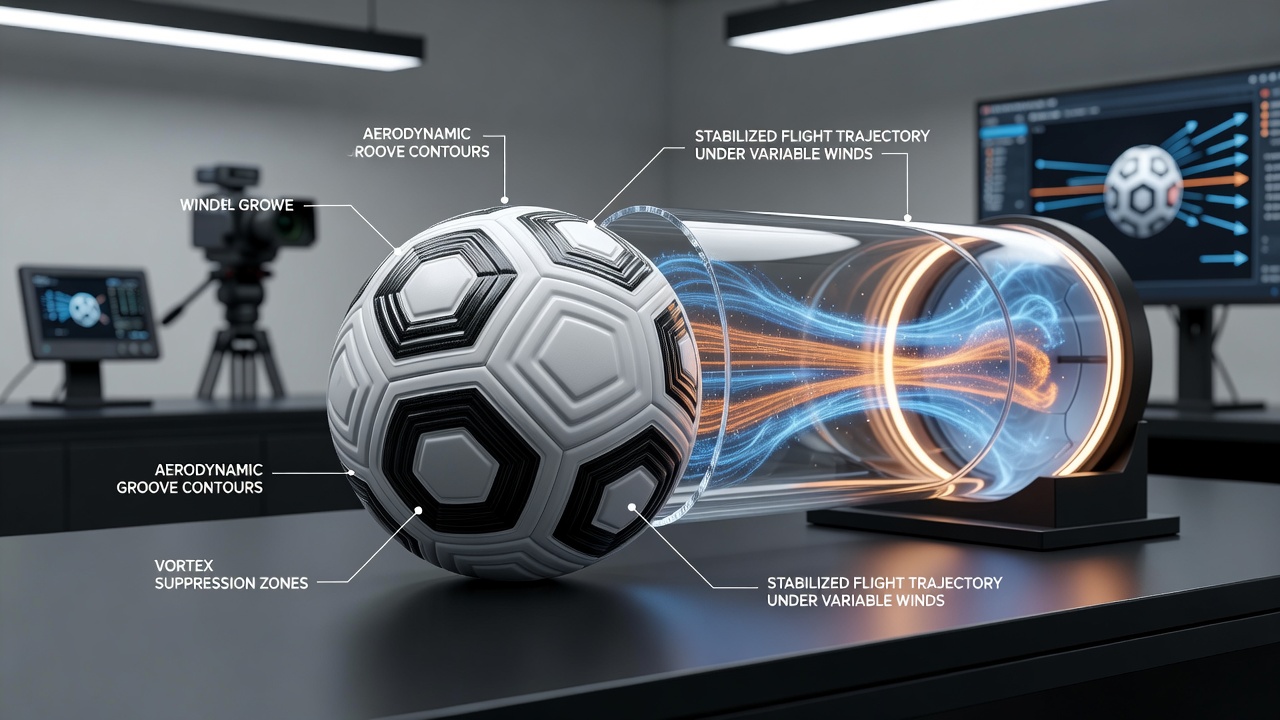
Manufacturers run full-scale prototypes through wind tunnels equipped with high-speed cameras that track trajectory deviations while fans simulate gust sequences recorded from actual stadiums. Data collected at these facilities feeds iterative adjustments to panel depth and seam angle until deviation stays within acceptable limits for competitive play. FIFA maintains a technical testing program that evaluates balls submitted by suppliers and publishes results on its official channels so member associations can reference the findings when selecting match equipment.
Independent laboratories in North America and Europe apply similar protocols and compare outcomes across different wind angles and speeds to verify that performance remains uniform regardless of geographic location. Those who've examined the datasets note that balls passing the full suite of tests show consistent behavior from one production batch to the next which supports fair competition across an entire season.
Integration Into League Standards
Professional leagues incorporate aerodynamic requirements into their equipment regulations so that every match ball meets the same contour specifications. Suppliers deliver balls months in advance of key events allowing teams to train with identical models and adapt their kicking techniques to the altered flight characteristics. The 2026 FIFA World Cup preparations include ongoing evaluation of panel designs that will face the varied wind patterns expected across North American venues and the governing body continues to reference updated stability metrics developed from recent tunnel campaigns.
Coaches and players receive technical briefings that explain how the contour features interact with spin imparted during set pieces and open play so they can anticipate minor trajectory adjustments without altering core skills. Equipment managers track ball performance logs throughout the season and report any deviations back to manufacturers for refinement in subsequent production runs.
Conclusion
Panel contouring represents a focused engineering response to the challenge of maintaining predictable ball paths when environmental conditions change rapidly during league fixtures. Continued refinement through combined wind tunnel work and on-field monitoring ensures that approved designs meet stability criteria across the range of speeds and wind vectors encountered in professional environments. As testing methods advance and new data accumulates suppliers adjust contour parameters to sustain performance consistency season after season.