Adaptive Knit Structures Revolutionize Football Jersey Design for Extended Performance
Written by Greta Peters · May 23, 2026
Adaptive Knit Structures Revolutionize Football Jersey Design for Extended Performance
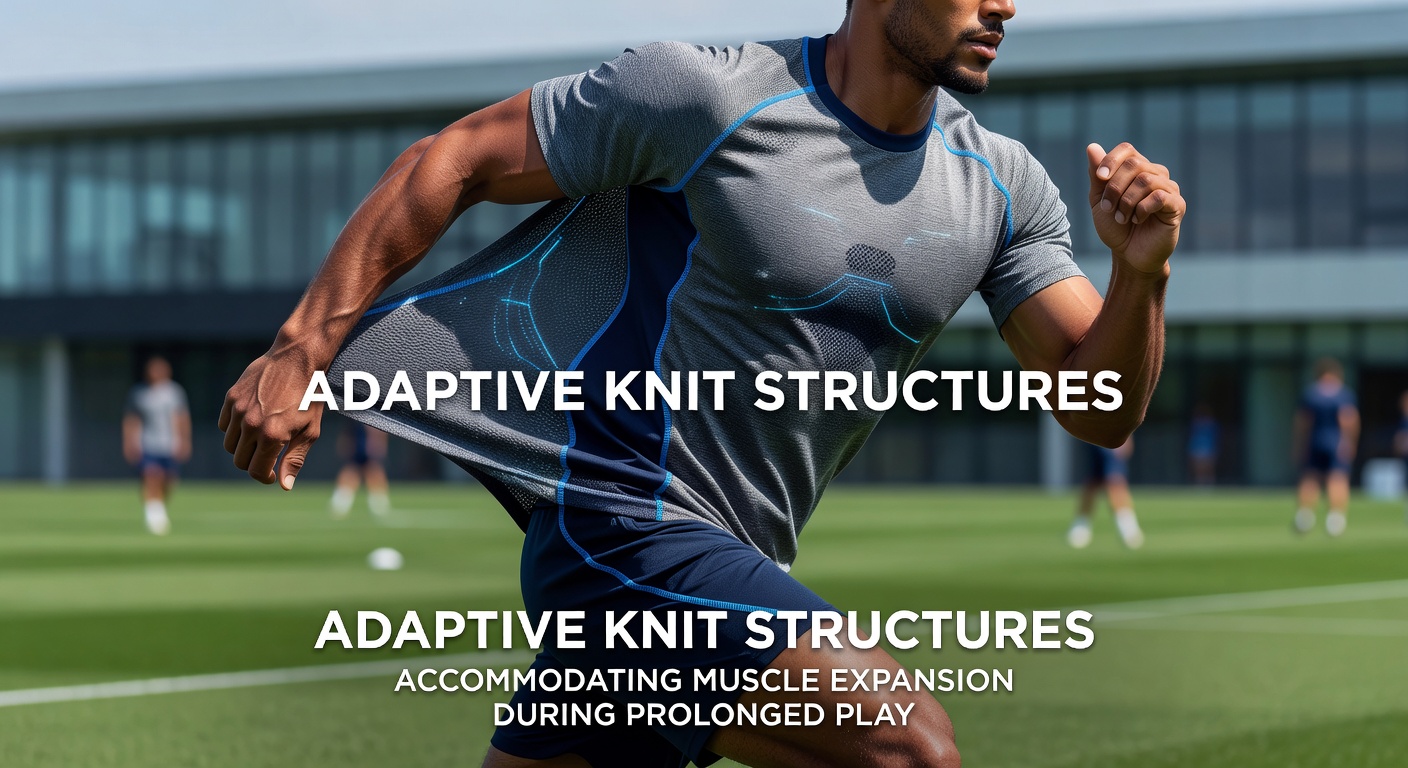
Football jerseys have incorporated advanced textile engineering that responds to physiological changes in athletes throughout extended matches, and adaptive knit structures represent one area where manufacturers integrate variable tension zones into garment construction. These designs rely on specialized yarn combinations and knitting patterns that permit localized expansion as muscle tissue increases in volume due to blood flow and fatigue accumulation.
Materials and Construction Techniques
Engineers combine elastomeric fibers with high-tenacity polyester or nylon bases to create fabrics that maintain shape integrity while allowing directional stretch, and production methods often employ computerized flat-bed knitting machines that program different stitch densities across a single panel. Zones around the shoulders, chest, and thighs receive looser interlock patterns, whereas areas requiring stability retain tighter constructions that prevent excessive distortion during sprints or tackles.
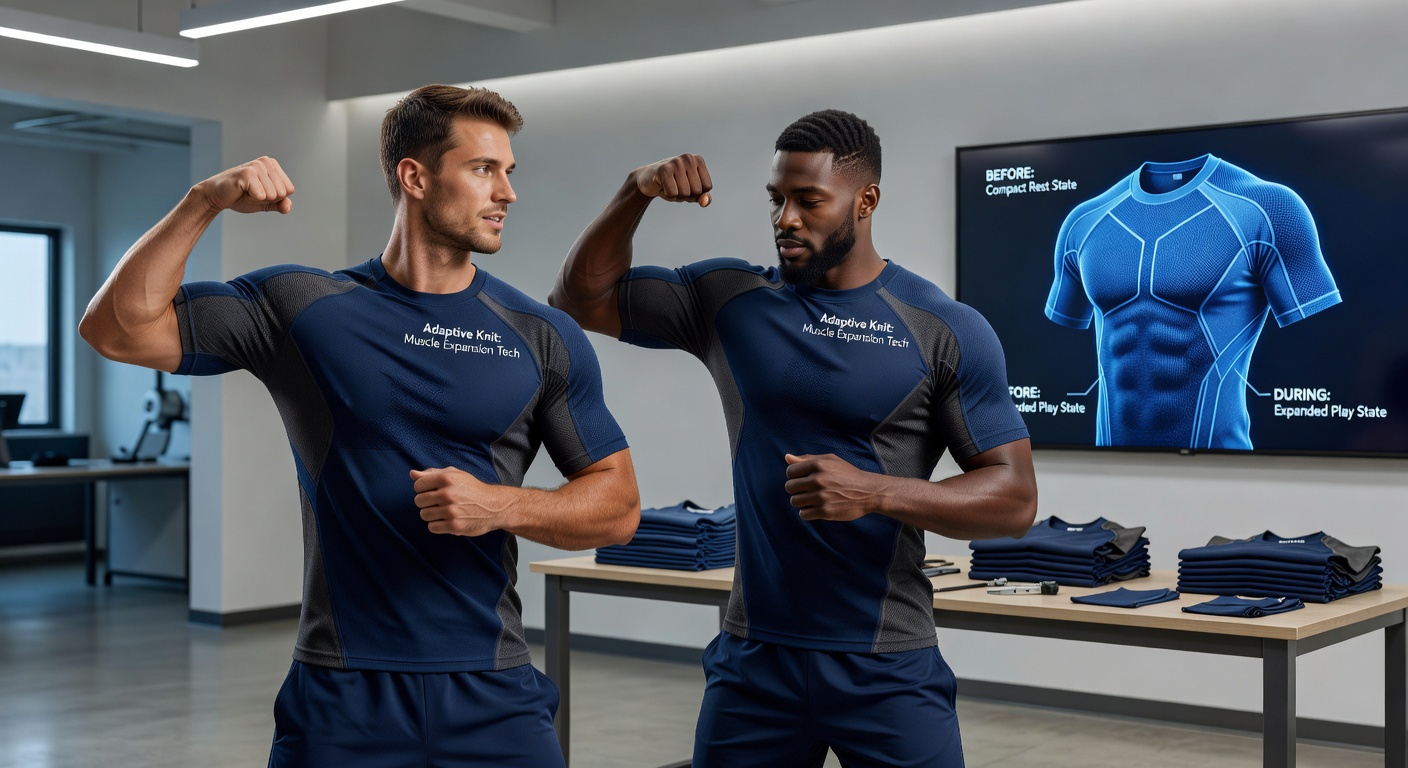
Shape-memory polymers appear in select prototypes where heat generated by the body triggers temporary reconfiguration of fiber alignment, and this approach builds on earlier work with moisture-responsive yarns that contract or relax based on sweat absorption levels. Data from textile laboratories indicate that such structures can accommodate up to 18 percent additional circumference in targeted regions without compromising overall garment recovery after repeated cycles of extension and relaxation.
Performance During Prolonged Matches
Players experience progressive muscle swelling as matches extend beyond 60 minutes, and conventional jerseys with uniform stretch properties sometimes create pressure points that restrict circulation or cause chafing. Adaptive knits address this by distributing tension across engineered panels, which reduces localized compression and maintains range of motion for actions like overhead throws or sliding tackles.
Training studies conducted by the Australian Institute of Sport tracked elite athletes wearing prototype jerseys during simulated 90-minute sessions and recorded lower ratings of perceived exertion in the final 15 minutes compared with control garments. Heart rate variability measurements remained consistent across both groups, yet subjective comfort scores improved noticeably when adaptive structures were present. These findings align with observations from European club academies that introduced similar fabrics during the 2025 season.
Adoption in Professional and Amateur Contexts
Major equipment suppliers began supplying adaptive knit jerseys to select professional leagues in late 2024, and by May 2026 several national federations had integrated the technology into youth development programs as well. The patterns vary by position, with goalkeepers receiving reinforced elbow and torso sections while midfielders obtain greater lateral stretch across the midsection to support rotational movements.
Cost considerations limit widespread rollout at lower levels, yet scaled production techniques continue to reduce unit prices, and community clubs report interest in bulk procurement for academy squads. Maintenance protocols require standard machine washing at 30 degrees Celsius, with manufacturers advising against fabric softeners that can degrade elastomeric performance over multiple cycles.
Research and Measurement Standards
Independent testing facilities measure expansion capacity through cyclic loading rigs that replicate repeated muscle contractions, and protocols developed by the Textile Research Association in Canada specify minimum recovery percentages after 500 stretch cycles. Results published through academic channels show consistent performance retention when garments undergo proper laundering and storage away from direct sunlight.
One study from the University of Manchester's materials science department examined thermal mapping of players in adaptive versus standard jerseys during indoor sessions and noted more uniform heat dissipation patterns across the torso, which researchers attribute to improved airflow through expanded knit channels. These measurements contribute to ongoing refinements in panel placement and yarn selection.
Conclusion
Adaptive knit structures continue to integrate into football apparel through incremental improvements in fiber technology and manufacturing precision, and ongoing collaboration between textile engineers and sports physiologists supports further optimization for different environmental conditions and match durations. Equipment standards organizations track adoption rates while athletes benefit from garments that respond dynamically to the demands of extended play.